mirror of
https://github.com/python/cpython.git
synced 2025-12-08 06:10:17 +00:00
 4fa80ce74c
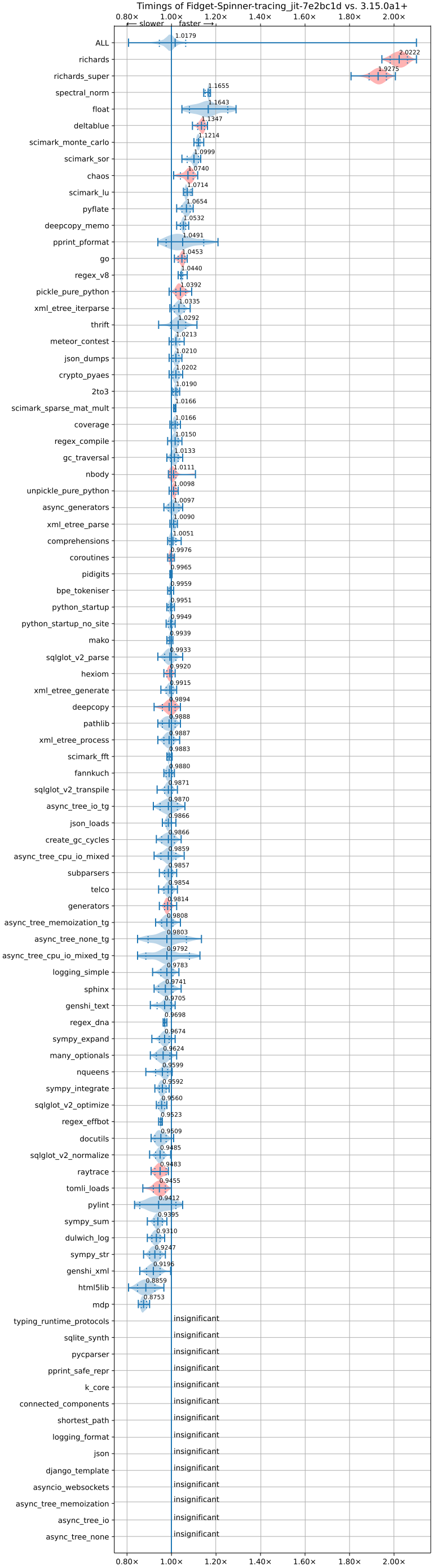
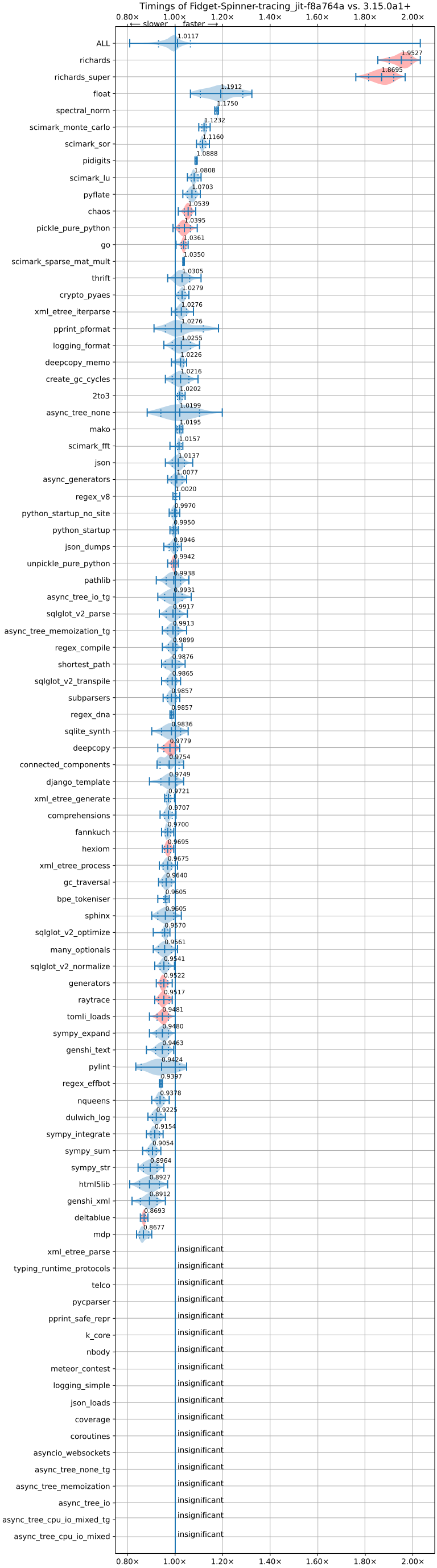
This PR changes the current JIT model from trace projection to trace recording. Benchmarking: better pyperformance (about 1.7% overall) geomean versus current https://raw.githubusercontent.com/facebookexperimental/free-threading-benchmarking/refs/heads/main/results/bm-20251108-3.15.0a1%2B-7e2bc1d-JIT/bm-20251108-vultr-x86_64-Fidget%252dSpinner-tracing_jit-3.15.0a1%2B-7e2bc1d-vs-base.svg, 100% faster Richards on the most improved benchmark versus the current JIT. Slowdown of about 10-15% on the worst benchmark versus the current JIT. **Note: the fastest version isn't the one merged, as it relies on fixing bugs in the specializing interpreter, which is left to another PR**. The speedup in the merged version is about 1.1%. https://raw.githubusercontent.com/facebookexperimental/free-threading-benchmarking/refs/heads/main/results/bm-20251112-3.15.0a1%2B-f8a764a-JIT/bm-20251112-vultr-x86_64-Fidget%252dSpinner-tracing_jit-3.15.0a1%2B-f8a764a-vs-base.svg

Stats: 50% more uops executed, 30% more traces entered the last time we ran them. It also suggests our trace lengths for a real trace recording JIT are too short, as a lot of trace too long aborts https://github.com/facebookexperimental/free-threading-benchmarking/blob/main/results/bm-20251023-3.15.0a1%2B-eb73378-CLANG%2CJIT/bm-20251023-vultr-x86_64-Fidget%252dSpinner-tracing_jit-3.15.0a1%2B-eb73378-pystats-vs-base.md .

This new JIT frontend is already able to record/execute significantly more instructions than the previous JIT frontend. In this PR, we are now able to record through custom dunders, simple object creation, generators, etc. None of these were done by the old JIT frontend. Some custom dunders uops were discovered to be broken as part of this work gh-140277

The optimizer stack space check is disabled, as it's no longer valid to deal with underflow.

Pros:
* Ignoring the generated tracer code as it's automatically created, this is only additional 1k lines of code. The maintenance burden is handled by the DSL and code generator.
* `optimizer.c` is now significantly simpler, as we don't have to do strange things to recover the bytecode from a trace.
* The new JIT frontend is able to handle a lot more control-flow than the old one.
* Tracing is very low overhead. We use the tail calling interpreter/computed goto interpreter to switch between tracing mode and non-tracing mode. I call this mechanism dual dispatch, as we have two dispatch tables dispatching to each other. Specialization is still enabled while tracing.
* Better handling of polymorphism. We leverage the specializing interpreter for this.

Cons:
* (For now) requires tail calling interpreter or computed gotos. This means no Windows JIT for now :(. Not to fret, tail calling is coming soon to Windows though https://github.com/python/cpython/pull/139962

Design:
* After each instruction, the `record_previous_inst` function/label is executed. This does as the name suggests.
* The tracing interpreter lowers bytecode to uops directly so that it can obtain "fresh" values at the point of lowering.
* The tracing version behaves nearly identical to the normal interpreter, in fact it even has specialization! This allows it to run without much of a slowdown when tracing. The actual cost of tracing is only a function call and writes to memory.
* The tracing interpreter uses the specializing interpreter's deopt to naturally form the side exit chains. This allows it to side exit chain effectively, without repeating much code. We force a re-specializing when tracing a deopt.
* The tracing interpreter can even handle goto errors/exceptions, but I chose to disable them for now as it's not tested.
* Because we do not share interpreter dispatch, there is should be no significant slowdown to the original specializing interpreter on tailcall and computed got with JIT disabled. With JIT enabled, there might be a slowdown in the form of the JIT trying to trace.
* Things that could have dynamic instruction pointer effects are guarded on. The guard deopts to a new instruction --- `_DYNAMIC_EXIT`.
2644 lines
91 KiB
Python
2644 lines
91 KiB
Python
import contextlib
|
|
import itertools
|
|
import sys
|
|
import textwrap
|
|
import unittest
|
|
import gc
|
|
import os
|
|
import types
|
|
|
|
import _opcode
|
|
|
|
from test.support import (script_helper, requires_specialization,
|
|
import_helper, Py_GIL_DISABLED, requires_jit_enabled,
|
|
reset_code)
|
|
|
|
_testinternalcapi = import_helper.import_module("_testinternalcapi")
|
|
|
|
from _testinternalcapi import _PY_NSMALLPOSINTS, TIER2_THRESHOLD
|
|
|
|
#For test of issue 136154
|
|
GLOBAL_136154 = 42
|
|
|
|
@contextlib.contextmanager
|
|
def clear_executors(func):
|
|
# Clear executors in func before and after running a block
|
|
reset_code(func)
|
|
try:
|
|
yield
|
|
finally:
|
|
reset_code(func)
|
|
|
|
|
|
def get_first_executor(func):
|
|
code = func.__code__
|
|
co_code = code.co_code
|
|
for i in range(0, len(co_code), 2):
|
|
try:
|
|
return _opcode.get_executor(code, i)
|
|
except ValueError:
|
|
pass
|
|
return None
|
|
|
|
|
|
def iter_opnames(ex):
|
|
for item in ex:
|
|
yield item[0]
|
|
|
|
|
|
def get_opnames(ex):
|
|
return list(iter_opnames(ex))
|
|
|
|
|
|
@requires_specialization
|
|
@unittest.skipIf(Py_GIL_DISABLED, "optimizer not yet supported in free-threaded builds")
|
|
@requires_jit_enabled
|
|
class TestExecutorInvalidation(unittest.TestCase):
|
|
|
|
def test_invalidate_object(self):
|
|
# Generate a new set of functions at each call
|
|
ns = {}
|
|
func_src = "\n".join(
|
|
f"""
|
|
def f{n}():
|
|
for _ in range({TIER2_THRESHOLD}):
|
|
pass
|
|
""" for n in range(5)
|
|
)
|
|
exec(textwrap.dedent(func_src), ns, ns)
|
|
funcs = [ ns[f'f{n}'] for n in range(5)]
|
|
objects = [object() for _ in range(5)]
|
|
|
|
for f in funcs:
|
|
f()
|
|
executors = [get_first_executor(f) for f in funcs]
|
|
# Set things up so each executor depends on the objects
|
|
# with an equal or lower index.
|
|
for i, exe in enumerate(executors):
|
|
self.assertTrue(exe.is_valid())
|
|
for obj in objects[:i+1]:
|
|
_testinternalcapi.add_executor_dependency(exe, obj)
|
|
self.assertTrue(exe.is_valid())
|
|
# Assert that the correct executors are invalidated
|
|
# and check that nothing crashes when we invalidate
|
|
# an executor multiple times.
|
|
for i in (4,3,2,1,0):
|
|
_testinternalcapi.invalidate_executors(objects[i])
|
|
for exe in executors[i:]:
|
|
self.assertFalse(exe.is_valid())
|
|
for exe in executors[:i]:
|
|
self.assertTrue(exe.is_valid())
|
|
|
|
def test_uop_optimizer_invalidation(self):
|
|
# Generate a new function at each call
|
|
ns = {}
|
|
exec(textwrap.dedent(f"""
|
|
def f():
|
|
for i in range({TIER2_THRESHOLD}):
|
|
pass
|
|
"""), ns, ns)
|
|
f = ns['f']
|
|
f()
|
|
exe = get_first_executor(f)
|
|
self.assertIsNotNone(exe)
|
|
self.assertTrue(exe.is_valid())
|
|
_testinternalcapi.invalidate_executors(f.__code__)
|
|
self.assertFalse(exe.is_valid())
|
|
|
|
def test_sys__clear_internal_caches(self):
|
|
def f():
|
|
for _ in range(TIER2_THRESHOLD):
|
|
pass
|
|
f()
|
|
exe = get_first_executor(f)
|
|
self.assertIsNotNone(exe)
|
|
self.assertTrue(exe.is_valid())
|
|
sys._clear_internal_caches()
|
|
self.assertFalse(exe.is_valid())
|
|
exe = get_first_executor(f)
|
|
self.assertIsNone(exe)
|
|
|
|
|
|
@requires_specialization
|
|
@unittest.skipIf(Py_GIL_DISABLED, "optimizer not yet supported in free-threaded builds")
|
|
@requires_jit_enabled
|
|
@unittest.skipIf(os.getenv("PYTHON_UOPS_OPTIMIZE") == "0", "Needs uop optimizer to run.")
|
|
class TestUops(unittest.TestCase):
|
|
|
|
def test_basic_loop(self):
|
|
def testfunc(x):
|
|
i = 0
|
|
while i < x:
|
|
i += 1
|
|
|
|
testfunc(TIER2_THRESHOLD)
|
|
|
|
ex = get_first_executor(testfunc)
|
|
self.assertIsNotNone(ex)
|
|
uops = get_opnames(ex)
|
|
self.assertIn("_JUMP_TO_TOP", uops)
|
|
self.assertIn("_LOAD_FAST_BORROW_0", uops)
|
|
|
|
def test_extended_arg(self):
|
|
"Check EXTENDED_ARG handling in superblock creation"
|
|
ns = {}
|
|
exec(textwrap.dedent(f"""
|
|
def many_vars():
|
|
# 260 vars, so z9 should have index 259
|
|
a0 = a1 = a2 = a3 = a4 = a5 = a6 = a7 = a8 = a9 = 42
|
|
b0 = b1 = b2 = b3 = b4 = b5 = b6 = b7 = b8 = b9 = 42
|
|
c0 = c1 = c2 = c3 = c4 = c5 = c6 = c7 = c8 = c9 = 42
|
|
d0 = d1 = d2 = d3 = d4 = d5 = d6 = d7 = d8 = d9 = 42
|
|
e0 = e1 = e2 = e3 = e4 = e5 = e6 = e7 = e8 = e9 = 42
|
|
f0 = f1 = f2 = f3 = f4 = f5 = f6 = f7 = f8 = f9 = 42
|
|
g0 = g1 = g2 = g3 = g4 = g5 = g6 = g7 = g8 = g9 = 42
|
|
h0 = h1 = h2 = h3 = h4 = h5 = h6 = h7 = h8 = h9 = 42
|
|
i0 = i1 = i2 = i3 = i4 = i5 = i6 = i7 = i8 = i9 = 42
|
|
j0 = j1 = j2 = j3 = j4 = j5 = j6 = j7 = j8 = j9 = 42
|
|
k0 = k1 = k2 = k3 = k4 = k5 = k6 = k7 = k8 = k9 = 42
|
|
l0 = l1 = l2 = l3 = l4 = l5 = l6 = l7 = l8 = l9 = 42
|
|
m0 = m1 = m2 = m3 = m4 = m5 = m6 = m7 = m8 = m9 = 42
|
|
n0 = n1 = n2 = n3 = n4 = n5 = n6 = n7 = n8 = n9 = 42
|
|
o0 = o1 = o2 = o3 = o4 = o5 = o6 = o7 = o8 = o9 = 42
|
|
p0 = p1 = p2 = p3 = p4 = p5 = p6 = p7 = p8 = p9 = 42
|
|
q0 = q1 = q2 = q3 = q4 = q5 = q6 = q7 = q8 = q9 = 42
|
|
r0 = r1 = r2 = r3 = r4 = r5 = r6 = r7 = r8 = r9 = 42
|
|
s0 = s1 = s2 = s3 = s4 = s5 = s6 = s7 = s8 = s9 = 42
|
|
t0 = t1 = t2 = t3 = t4 = t5 = t6 = t7 = t8 = t9 = 42
|
|
u0 = u1 = u2 = u3 = u4 = u5 = u6 = u7 = u8 = u9 = 42
|
|
v0 = v1 = v2 = v3 = v4 = v5 = v6 = v7 = v8 = v9 = 42
|
|
w0 = w1 = w2 = w3 = w4 = w5 = w6 = w7 = w8 = w9 = 42
|
|
x0 = x1 = x2 = x3 = x4 = x5 = x6 = x7 = x8 = x9 = 42
|
|
y0 = y1 = y2 = y3 = y4 = y5 = y6 = y7 = y8 = y9 = 42
|
|
z0 = z1 = z2 = z3 = z4 = z5 = z6 = z7 = z8 = z9 = {TIER2_THRESHOLD}
|
|
while z9 > 0:
|
|
z9 = z9 - 1
|
|
+z9
|
|
"""), ns, ns)
|
|
many_vars = ns["many_vars"]
|
|
|
|
ex = get_first_executor(many_vars)
|
|
self.assertIsNone(ex)
|
|
many_vars()
|
|
|
|
ex = get_first_executor(many_vars)
|
|
self.assertIsNotNone(ex)
|
|
self.assertTrue(any((opcode, oparg, operand) == ("_LOAD_FAST_BORROW", 259, 0)
|
|
for opcode, oparg, _, operand in list(ex)))
|
|
|
|
def test_unspecialized_unpack(self):
|
|
# An example of an unspecialized opcode
|
|
def testfunc(x):
|
|
i = 0
|
|
while i < x:
|
|
i += 1
|
|
a, b = {1: 2, 3: 3}
|
|
assert a == 1 and b == 3
|
|
i = 0
|
|
while i < x:
|
|
i += 1
|
|
|
|
testfunc(TIER2_THRESHOLD)
|
|
|
|
ex = get_first_executor(testfunc)
|
|
self.assertIsNotNone(ex)
|
|
uops = get_opnames(ex)
|
|
self.assertIn("_UNPACK_SEQUENCE", uops)
|
|
|
|
def test_pop_jump_if_false(self):
|
|
def testfunc(n):
|
|
i = 0
|
|
while i < n:
|
|
i += 1
|
|
|
|
testfunc(TIER2_THRESHOLD)
|
|
|
|
ex = get_first_executor(testfunc)
|
|
self.assertIsNotNone(ex)
|
|
uops = get_opnames(ex)
|
|
self.assertIn("_GUARD_IS_TRUE_POP", uops)
|
|
|
|
def test_pop_jump_if_none(self):
|
|
def testfunc(a):
|
|
for x in a:
|
|
if x is None:
|
|
x = 0
|
|
|
|
testfunc(range(TIER2_THRESHOLD))
|
|
|
|
ex = get_first_executor(testfunc)
|
|
self.assertIsNotNone(ex)
|
|
uops = get_opnames(ex)
|
|
self.assertNotIn("_GUARD_IS_NONE_POP", uops)
|
|
self.assertNotIn("_GUARD_IS_NOT_NONE_POP", uops)
|
|
|
|
def test_pop_jump_if_not_none(self):
|
|
def testfunc(a):
|
|
for x in a:
|
|
x = None
|
|
if x is not None:
|
|
x = 0
|
|
|
|
testfunc(range(TIER2_THRESHOLD))
|
|
|
|
ex = get_first_executor(testfunc)
|
|
self.assertIsNotNone(ex)
|
|
uops = get_opnames(ex)
|
|
self.assertNotIn("_GUARD_IS_NONE_POP", uops)
|
|
self.assertNotIn("_GUARD_IS_NOT_NONE_POP", uops)
|
|
|
|
def test_pop_jump_if_true(self):
|
|
def testfunc(n):
|
|
i = 0
|
|
while not i >= n:
|
|
i += 1
|
|
|
|
testfunc(TIER2_THRESHOLD)
|
|
|
|
ex = get_first_executor(testfunc)
|
|
self.assertIsNotNone(ex)
|
|
uops = get_opnames(ex)
|
|
self.assertIn("_GUARD_IS_FALSE_POP", uops)
|
|
|
|
def test_jump_backward(self):
|
|
def testfunc(n):
|
|
i = 0
|
|
while i < n:
|
|
i += 1
|
|
|
|
testfunc(TIER2_THRESHOLD)
|
|
|
|
ex = get_first_executor(testfunc)
|
|
self.assertIsNotNone(ex)
|
|
uops = get_opnames(ex)
|
|
self.assertIn("_JUMP_TO_TOP", uops)
|
|
|
|
def test_jump_forward(self):
|
|
def testfunc(n):
|
|
a = 0
|
|
while a < n:
|
|
if a < 0:
|
|
a = -a
|
|
else:
|
|
a = +a
|
|
a += 1
|
|
return a
|
|
|
|
testfunc(TIER2_THRESHOLD)
|
|
|
|
ex = get_first_executor(testfunc)
|
|
self.assertIsNotNone(ex)
|
|
uops = get_opnames(ex)
|
|
# Since there is no JUMP_FORWARD instruction,
|
|
# look for indirect evidence: the += operator
|
|
self.assertIn("_BINARY_OP_ADD_INT", uops)
|
|
|
|
def test_for_iter_range(self):
|
|
def testfunc(n):
|
|
total = 0
|
|
for i in range(n):
|
|
total += i
|
|
return total
|
|
|
|
total = testfunc(TIER2_THRESHOLD)
|
|
self.assertEqual(total, sum(range(TIER2_THRESHOLD)))
|
|
|
|
ex = get_first_executor(testfunc)
|
|
self.assertIsNotNone(ex)
|
|
# for i, (opname, oparg) in enumerate(ex):
|
|
# print(f"{i:4d}: {opname:<20s} {oparg:3d}")
|
|
uops = get_opnames(ex)
|
|
self.assertIn("_GUARD_NOT_EXHAUSTED_RANGE", uops)
|
|
# Verification that the jump goes past END_FOR
|
|
# is done by manual inspection of the output
|
|
|
|
def test_for_iter_list(self):
|
|
def testfunc(a):
|
|
total = 0
|
|
for i in a:
|
|
total += i
|
|
return total
|
|
|
|
a = list(range(TIER2_THRESHOLD))
|
|
total = testfunc(a)
|
|
self.assertEqual(total, sum(a))
|
|
|
|
ex = get_first_executor(testfunc)
|
|
self.assertIsNotNone(ex)
|
|
# for i, (opname, oparg) in enumerate(ex):
|
|
# print(f"{i:4d}: {opname:<20s} {oparg:3d}")
|
|
uops = get_opnames(ex)
|
|
self.assertIn("_GUARD_NOT_EXHAUSTED_LIST", uops)
|
|
# Verification that the jump goes past END_FOR
|
|
# is done by manual inspection of the output
|
|
|
|
def test_for_iter_tuple(self):
|
|
def testfunc(a):
|
|
total = 0
|
|
for i in a:
|
|
total += i
|
|
return total
|
|
|
|
a = tuple(range(TIER2_THRESHOLD))
|
|
total = testfunc(a)
|
|
self.assertEqual(total, sum(a))
|
|
|
|
ex = get_first_executor(testfunc)
|
|
self.assertIsNotNone(ex)
|
|
# for i, (opname, oparg) in enumerate(ex):
|
|
# print(f"{i:4d}: {opname:<20s} {oparg:3d}")
|
|
uops = get_opnames(ex)
|
|
self.assertIn("_GUARD_NOT_EXHAUSTED_TUPLE", uops)
|
|
# Verification that the jump goes past END_FOR
|
|
# is done by manual inspection of the output
|
|
|
|
def test_list_edge_case(self):
|
|
def testfunc(it):
|
|
for x in it:
|
|
pass
|
|
|
|
a = [1, 2, 3]
|
|
it = iter(a)
|
|
testfunc(it)
|
|
a.append(4)
|
|
with self.assertRaises(StopIteration):
|
|
next(it)
|
|
|
|
def test_call_py_exact_args(self):
|
|
def testfunc(n):
|
|
def dummy(x):
|
|
return x+1
|
|
for i in range(n):
|
|
dummy(i)
|
|
|
|
testfunc(TIER2_THRESHOLD)
|
|
|
|
ex = get_first_executor(testfunc)
|
|
self.assertIsNotNone(ex)
|
|
uops = get_opnames(ex)
|
|
self.assertIn("_PUSH_FRAME", uops)
|
|
self.assertIn("_BINARY_OP_ADD_INT", uops)
|
|
|
|
def test_branch_taken(self):
|
|
def testfunc(n):
|
|
for i in range(n):
|
|
if i < 0:
|
|
i = 0
|
|
else:
|
|
i = 1
|
|
|
|
testfunc(TIER2_THRESHOLD)
|
|
|
|
ex = get_first_executor(testfunc)
|
|
self.assertIsNotNone(ex)
|
|
uops = get_opnames(ex)
|
|
self.assertIn("_GUARD_IS_FALSE_POP", uops)
|
|
|
|
def test_for_iter_tier_two(self):
|
|
class MyIter:
|
|
def __init__(self, n):
|
|
self.n = n
|
|
def __iter__(self):
|
|
return self
|
|
def __next__(self):
|
|
self.n -= 1
|
|
if self.n < 0:
|
|
raise StopIteration
|
|
return self.n
|
|
|
|
def testfunc(n, m):
|
|
x = 0
|
|
for i in range(m):
|
|
for j in MyIter(n):
|
|
x += j
|
|
return x
|
|
|
|
x = testfunc(TIER2_THRESHOLD, 2)
|
|
|
|
self.assertEqual(x, sum(range(TIER2_THRESHOLD)) * 2)
|
|
|
|
ex = get_first_executor(testfunc)
|
|
self.assertIsNotNone(ex)
|
|
uops = get_opnames(ex)
|
|
self.assertIn("_FOR_ITER_TIER_TWO", uops)
|
|
|
|
|
|
@requires_specialization
|
|
@unittest.skipIf(Py_GIL_DISABLED, "optimizer not yet supported in free-threaded builds")
|
|
@requires_jit_enabled
|
|
@unittest.skipIf(os.getenv("PYTHON_UOPS_OPTIMIZE") == "0", "Needs uop optimizer to run.")
|
|
class TestUopsOptimization(unittest.TestCase):
|
|
|
|
def _run_with_optimizer(self, testfunc, arg):
|
|
res = testfunc(arg)
|
|
|
|
ex = get_first_executor(testfunc)
|
|
return res, ex
|
|
|
|
|
|
def test_int_type_propagation(self):
|
|
def testfunc(loops):
|
|
num = 0
|
|
for i in range(loops):
|
|
x = num + num
|
|
a = x + 1
|
|
num += 1
|
|
return a
|
|
|
|
res, ex = self._run_with_optimizer(testfunc, TIER2_THRESHOLD)
|
|
self.assertIsNotNone(ex)
|
|
self.assertEqual(res, (TIER2_THRESHOLD - 1) * 2 + 1)
|
|
binop_count = [opname for opname in iter_opnames(ex) if opname == "_BINARY_OP_ADD_INT"]
|
|
guard_tos_int_count = [opname for opname in iter_opnames(ex) if opname == "_GUARD_TOS_INT"]
|
|
guard_nos_int_count = [opname for opname in iter_opnames(ex) if opname == "_GUARD_NOS_INT"]
|
|
self.assertGreaterEqual(len(binop_count), 3)
|
|
self.assertLessEqual(len(guard_tos_int_count), 1)
|
|
self.assertLessEqual(len(guard_nos_int_count), 1)
|
|
|
|
def test_int_type_propagation_through_frame(self):
|
|
def double(x):
|
|
return x + x
|
|
def testfunc(loops):
|
|
num = 0
|
|
for i in range(loops):
|
|
x = num + num
|
|
a = double(x)
|
|
num += 1
|
|
return a
|
|
|
|
res = testfunc(TIER2_THRESHOLD)
|
|
|
|
ex = get_first_executor(testfunc)
|
|
self.assertIsNotNone(ex)
|
|
self.assertEqual(res, (TIER2_THRESHOLD - 1) * 4)
|
|
binop_count = [opname for opname in iter_opnames(ex) if opname == "_BINARY_OP_ADD_INT"]
|
|
guard_tos_int_count = [opname for opname in iter_opnames(ex) if opname == "_GUARD_TOS_INT"]
|
|
guard_nos_int_count = [opname for opname in iter_opnames(ex) if opname == "_GUARD_NOS_INT"]
|
|
self.assertGreaterEqual(len(binop_count), 3)
|
|
self.assertLessEqual(len(guard_tos_int_count), 1)
|
|
self.assertLessEqual(len(guard_nos_int_count), 1)
|
|
|
|
def test_int_type_propagation_from_frame(self):
|
|
def double(x):
|
|
return x + x
|
|
def testfunc(loops):
|
|
num = 0
|
|
for i in range(loops):
|
|
a = double(num)
|
|
x = a + a
|
|
num += 1
|
|
return x
|
|
|
|
res = testfunc(TIER2_THRESHOLD)
|
|
|
|
ex = get_first_executor(testfunc)
|
|
self.assertIsNotNone(ex)
|
|
self.assertEqual(res, (TIER2_THRESHOLD - 1) * 4)
|
|
binop_count = [opname for opname in iter_opnames(ex) if opname == "_BINARY_OP_ADD_INT"]
|
|
guard_tos_int_count = [opname for opname in iter_opnames(ex) if opname == "_GUARD_TOS_INT"]
|
|
guard_nos_int_count = [opname for opname in iter_opnames(ex) if opname == "_GUARD_NOS_INT"]
|
|
self.assertGreaterEqual(len(binop_count), 3)
|
|
self.assertLessEqual(len(guard_tos_int_count), 1)
|
|
self.assertLessEqual(len(guard_nos_int_count), 1)
|
|
|
|
def test_int_impure_region(self):
|
|
def testfunc(loops):
|
|
num = 0
|
|
while num < loops:
|
|
x = num + num
|
|
y = 1
|
|
x // 2
|
|
a = x + y
|
|
num += 1
|
|
return a
|
|
|
|
res, ex = self._run_with_optimizer(testfunc, TIER2_THRESHOLD)
|
|
self.assertIsNotNone(ex)
|
|
binop_count = [opname for opname in iter_opnames(ex) if opname == "_BINARY_OP_ADD_INT"]
|
|
self.assertGreaterEqual(len(binop_count), 3)
|
|
|
|
def test_call_py_exact_args(self):
|
|
def testfunc(n):
|
|
def dummy(x):
|
|
return x+1
|
|
for i in range(n):
|
|
dummy(i)
|
|
|
|
res, ex = self._run_with_optimizer(testfunc, TIER2_THRESHOLD)
|
|
self.assertIsNotNone(ex)
|
|
uops = get_opnames(ex)
|
|
self.assertIn("_PUSH_FRAME", uops)
|
|
self.assertIn("_BINARY_OP_ADD_INT", uops)
|
|
self.assertNotIn("_CHECK_PEP_523", uops)
|
|
|
|
def test_int_type_propagate_through_range(self):
|
|
def testfunc(n):
|
|
|
|
for i in range(n):
|
|
x = i + i
|
|
return x
|
|
|
|
res, ex = self._run_with_optimizer(testfunc, TIER2_THRESHOLD)
|
|
self.assertEqual(res, (TIER2_THRESHOLD - 1) * 2)
|
|
self.assertIsNotNone(ex)
|
|
uops = get_opnames(ex)
|
|
self.assertNotIn("_GUARD_TOS_INT", uops)
|
|
self.assertNotIn("_GUARD_NOS_INT", uops)
|
|
|
|
def test_int_value_numbering(self):
|
|
def testfunc(n):
|
|
|
|
y = 1
|
|
for i in range(n):
|
|
x = y
|
|
z = x
|
|
a = z
|
|
b = a
|
|
res = x + z + a + b
|
|
return res
|
|
|
|
res, ex = self._run_with_optimizer(testfunc, TIER2_THRESHOLD)
|
|
self.assertEqual(res, 4)
|
|
self.assertIsNotNone(ex)
|
|
uops = get_opnames(ex)
|
|
self.assertIn("_GUARD_TOS_INT", uops)
|
|
self.assertNotIn("_GUARD_NOS_INT", uops)
|
|
guard_tos_count = [opname for opname in iter_opnames(ex) if opname == "_GUARD_TOS_INT"]
|
|
self.assertEqual(len(guard_tos_count), 1)
|
|
|
|
def test_comprehension(self):
|
|
def testfunc(n):
|
|
for _ in range(n):
|
|
return [i for i in range(n)]
|
|
|
|
res, ex = self._run_with_optimizer(testfunc, TIER2_THRESHOLD)
|
|
self.assertEqual(res, list(range(TIER2_THRESHOLD)))
|
|
self.assertIsNotNone(ex)
|
|
uops = get_opnames(ex)
|
|
self.assertNotIn("_BINARY_OP_ADD_INT", uops)
|
|
|
|
def test_call_py_exact_args_disappearing(self):
|
|
def dummy(x):
|
|
return x+1
|
|
|
|
def testfunc(n):
|
|
for i in range(n):
|
|
dummy(i)
|
|
|
|
# Trigger specialization
|
|
testfunc(8)
|
|
del dummy
|
|
gc.collect()
|
|
|
|
def dummy(x):
|
|
return x + 2
|
|
testfunc(32)
|
|
|
|
ex = get_first_executor(testfunc)
|
|
# Honestly as long as it doesn't crash it's fine.
|
|
# Whether we get an executor or not is non-deterministic,
|
|
# because it's decided by when the function is freed.
|
|
# This test is a little implementation specific.
|
|
|
|
def test_promote_globals_to_constants(self):
|
|
|
|
result = script_helper.run_python_until_end('-c', textwrap.dedent("""
|
|
import _testinternalcapi
|
|
import opcode
|
|
import _opcode
|
|
|
|
def get_first_executor(func):
|
|
code = func.__code__
|
|
co_code = code.co_code
|
|
for i in range(0, len(co_code), 2):
|
|
try:
|
|
return _opcode.get_executor(code, i)
|
|
except ValueError:
|
|
pass
|
|
return None
|
|
|
|
def get_opnames(ex):
|
|
return {item[0] for item in ex}
|
|
|
|
def testfunc(n):
|
|
for i in range(n):
|
|
x = range(i)
|
|
return x
|
|
|
|
testfunc(_testinternalcapi.TIER2_THRESHOLD)
|
|
|
|
ex = get_first_executor(testfunc)
|
|
assert ex is not None
|
|
uops = get_opnames(ex)
|
|
assert "_LOAD_GLOBAL_BUILTINS" not in uops
|
|
assert "_LOAD_CONST_INLINE_BORROW" in uops
|
|
"""), PYTHON_JIT="1")
|
|
self.assertEqual(result[0].rc, 0, result)
|
|
|
|
def test_float_add_constant_propagation(self):
|
|
def testfunc(n):
|
|
a = 1.0
|
|
for _ in range(n):
|
|
a = a + 0.25
|
|
a = a + 0.25
|
|
a = a + 0.25
|
|
a = a + 0.25
|
|
return a
|
|
|
|
res, ex = self._run_with_optimizer(testfunc, TIER2_THRESHOLD)
|
|
self.assertAlmostEqual(res, TIER2_THRESHOLD + 1)
|
|
self.assertIsNotNone(ex)
|
|
uops = get_opnames(ex)
|
|
guard_tos_float_count = [opname for opname in iter_opnames(ex) if opname == "_GUARD_TOS_FLOAT"]
|
|
guard_nos_float_count = [opname for opname in iter_opnames(ex) if opname == "_GUARD_NOS_FLOAT"]
|
|
self.assertLessEqual(len(guard_tos_float_count), 1)
|
|
self.assertLessEqual(len(guard_nos_float_count), 1)
|
|
# TODO gh-115506: this assertion may change after propagating constants.
|
|
# We'll also need to verify that propagation actually occurs.
|
|
self.assertIn("_BINARY_OP_ADD_FLOAT__NO_DECREF_INPUTS", uops)
|
|
|
|
def test_float_subtract_constant_propagation(self):
|
|
def testfunc(n):
|
|
a = 1.0
|
|
for _ in range(n):
|
|
a = a - 0.25
|
|
a = a - 0.25
|
|
a = a - 0.25
|
|
a = a - 0.25
|
|
return a
|
|
|
|
res, ex = self._run_with_optimizer(testfunc, TIER2_THRESHOLD)
|
|
self.assertAlmostEqual(res, -TIER2_THRESHOLD + 1)
|
|
self.assertIsNotNone(ex)
|
|
uops = get_opnames(ex)
|
|
guard_tos_float_count = [opname for opname in iter_opnames(ex) if opname == "_GUARD_TOS_FLOAT"]
|
|
guard_nos_float_count = [opname for opname in iter_opnames(ex) if opname == "_GUARD_NOS_FLOAT"]
|
|
self.assertLessEqual(len(guard_tos_float_count), 1)
|
|
self.assertLessEqual(len(guard_nos_float_count), 1)
|
|
# TODO gh-115506: this assertion may change after propagating constants.
|
|
# We'll also need to verify that propagation actually occurs.
|
|
self.assertIn("_BINARY_OP_SUBTRACT_FLOAT__NO_DECREF_INPUTS", uops)
|
|
|
|
def test_float_multiply_constant_propagation(self):
|
|
def testfunc(n):
|
|
a = 1.0
|
|
for _ in range(n):
|
|
a = a * 1.0
|
|
a = a * 1.0
|
|
a = a * 1.0
|
|
a = a * 1.0
|
|
return a
|
|
|
|
res, ex = self._run_with_optimizer(testfunc, TIER2_THRESHOLD)
|
|
self.assertAlmostEqual(res, 1.0)
|
|
self.assertIsNotNone(ex)
|
|
uops = get_opnames(ex)
|
|
guard_tos_float_count = [opname for opname in iter_opnames(ex) if opname == "_GUARD_TOS_FLOAT"]
|
|
guard_nos_float_count = [opname for opname in iter_opnames(ex) if opname == "_GUARD_NOS_FLOAT"]
|
|
self.assertLessEqual(len(guard_tos_float_count), 1)
|
|
self.assertLessEqual(len(guard_nos_float_count), 1)
|
|
# TODO gh-115506: this assertion may change after propagating constants.
|
|
# We'll also need to verify that propagation actually occurs.
|
|
self.assertIn("_BINARY_OP_MULTIPLY_FLOAT__NO_DECREF_INPUTS", uops)
|
|
|
|
def test_add_unicode_propagation(self):
|
|
def testfunc(n):
|
|
a = ""
|
|
for _ in range(n):
|
|
a + a
|
|
a + a
|
|
a + a
|
|
a + a
|
|
return a
|
|
|
|
res, ex = self._run_with_optimizer(testfunc, TIER2_THRESHOLD)
|
|
self.assertEqual(res, "")
|
|
self.assertIsNotNone(ex)
|
|
uops = get_opnames(ex)
|
|
guard_tos_unicode_count = [opname for opname in iter_opnames(ex) if opname == "_GUARD_TOS_UNICODE"]
|
|
guard_nos_unicode_count = [opname for opname in iter_opnames(ex) if opname == "_GUARD_NOS_UNICODE"]
|
|
self.assertLessEqual(len(guard_tos_unicode_count), 1)
|
|
self.assertLessEqual(len(guard_nos_unicode_count), 1)
|
|
self.assertIn("_BINARY_OP_ADD_UNICODE", uops)
|
|
|
|
def test_compare_op_type_propagation_float(self):
|
|
def testfunc(n):
|
|
a = 1.0
|
|
for _ in range(n):
|
|
x = a == a
|
|
x = a == a
|
|
x = a == a
|
|
x = a == a
|
|
return x
|
|
|
|
res, ex = self._run_with_optimizer(testfunc, TIER2_THRESHOLD)
|
|
self.assertTrue(res)
|
|
self.assertIsNotNone(ex)
|
|
uops = get_opnames(ex)
|
|
guard_tos_float_count = [opname for opname in iter_opnames(ex) if opname == "_GUARD_TOS_FLOAT"]
|
|
guard_nos_float_count = [opname for opname in iter_opnames(ex) if opname == "_GUARD_NOS_FLOAT"]
|
|
self.assertLessEqual(len(guard_tos_float_count), 1)
|
|
self.assertLessEqual(len(guard_nos_float_count), 1)
|
|
self.assertIn("_COMPARE_OP_FLOAT", uops)
|
|
|
|
def test_compare_op_type_propagation_int(self):
|
|
def testfunc(n):
|
|
a = 1
|
|
for _ in range(n):
|
|
x = a == a
|
|
x = a == a
|
|
x = a == a
|
|
x = a == a
|
|
return x
|
|
|
|
res, ex = self._run_with_optimizer(testfunc, TIER2_THRESHOLD)
|
|
self.assertTrue(res)
|
|
self.assertIsNotNone(ex)
|
|
uops = get_opnames(ex)
|
|
guard_tos_int_count = [opname for opname in iter_opnames(ex) if opname == "_GUARD_TOS_INT"]
|
|
guard_nos_int_count = [opname for opname in iter_opnames(ex) if opname == "_GUARD_NOS_INT"]
|
|
self.assertLessEqual(len(guard_tos_int_count), 1)
|
|
self.assertLessEqual(len(guard_nos_int_count), 1)
|
|
self.assertIn("_COMPARE_OP_INT", uops)
|
|
|
|
def test_compare_op_type_propagation_int_partial(self):
|
|
def testfunc(n):
|
|
a = 1
|
|
for _ in range(n):
|
|
if a > 2:
|
|
x = 0
|
|
if a < 2:
|
|
x = 1
|
|
return x
|
|
|
|
res, ex = self._run_with_optimizer(testfunc, TIER2_THRESHOLD)
|
|
self.assertEqual(res, 1)
|
|
self.assertIsNotNone(ex)
|
|
uops = get_opnames(ex)
|
|
guard_nos_int_count = [opname for opname in iter_opnames(ex) if opname == "_GUARD_NOS_INT"]
|
|
guard_tos_int_count = [opname for opname in iter_opnames(ex) if opname == "_GUARD_TOS_INT"]
|
|
self.assertLessEqual(len(guard_nos_int_count), 1)
|
|
self.assertEqual(len(guard_tos_int_count), 0)
|
|
self.assertIn("_COMPARE_OP_INT", uops)
|
|
|
|
def test_compare_op_type_propagation_float_partial(self):
|
|
def testfunc(n):
|
|
a = 1.0
|
|
for _ in range(n):
|
|
if a > 2.0:
|
|
x = 0
|
|
if a < 2.0:
|
|
x = 1
|
|
return x
|
|
|
|
res, ex = self._run_with_optimizer(testfunc, TIER2_THRESHOLD)
|
|
self.assertEqual(res, 1)
|
|
self.assertIsNotNone(ex)
|
|
uops = get_opnames(ex)
|
|
guard_nos_float_count = [opname for opname in iter_opnames(ex) if opname == "_GUARD_NOS_FLOAT"]
|
|
guard_tos_float_count = [opname for opname in iter_opnames(ex) if opname == "_GUARD_TOS_FLOAT"]
|
|
self.assertLessEqual(len(guard_nos_float_count), 1)
|
|
self.assertEqual(len(guard_tos_float_count), 0)
|
|
self.assertIn("_COMPARE_OP_FLOAT", uops)
|
|
|
|
def test_compare_op_type_propagation_unicode(self):
|
|
def testfunc(n):
|
|
a = ""
|
|
for _ in range(n):
|
|
x = a == a
|
|
x = a == a
|
|
x = a == a
|
|
x = a == a
|
|
return x
|
|
|
|
res, ex = self._run_with_optimizer(testfunc, TIER2_THRESHOLD)
|
|
self.assertTrue(res)
|
|
self.assertIsNotNone(ex)
|
|
uops = get_opnames(ex)
|
|
guard_tos_unicode_count = [opname for opname in iter_opnames(ex) if opname == "_GUARD_TOS_UNICODE"]
|
|
guard_nos_unicode_count = [opname for opname in iter_opnames(ex) if opname == "_GUARD_NOS_UNICODE"]
|
|
self.assertLessEqual(len(guard_tos_unicode_count), 1)
|
|
self.assertLessEqual(len(guard_nos_unicode_count), 1)
|
|
self.assertIn("_COMPARE_OP_STR", uops)
|
|
|
|
@unittest.skip("gh-139109 WIP")
|
|
def test_combine_stack_space_checks_sequential(self):
|
|
def dummy12(x):
|
|
return x - 1
|
|
def dummy13(y):
|
|
z = y + 2
|
|
return y, z
|
|
def testfunc(n):
|
|
a = 0
|
|
for _ in range(n):
|
|
b = dummy12(7)
|
|
c, d = dummy13(9)
|
|
a += b + c + d
|
|
return a
|
|
|
|
res, ex = self._run_with_optimizer(testfunc, TIER2_THRESHOLD)
|
|
self.assertEqual(res, TIER2_THRESHOLD * 26)
|
|
self.assertIsNotNone(ex)
|
|
|
|
uops_and_operands = [(opcode, operand) for opcode, _, _, operand in ex]
|
|
uop_names = [uop[0] for uop in uops_and_operands]
|
|
self.assertEqual(uop_names.count("_PUSH_FRAME"), 2)
|
|
self.assertEqual(uop_names.count("_RETURN_VALUE"), 2)
|
|
self.assertEqual(uop_names.count("_CHECK_STACK_SPACE"), 0)
|
|
self.assertEqual(uop_names.count("_CHECK_STACK_SPACE_OPERAND"), 1)
|
|
# sequential calls: max(12, 13) == 13
|
|
largest_stack = _testinternalcapi.get_co_framesize(dummy13.__code__)
|
|
self.assertIn(("_CHECK_STACK_SPACE_OPERAND", largest_stack), uops_and_operands)
|
|
|
|
@unittest.skip("gh-139109 WIP")
|
|
def test_combine_stack_space_checks_nested(self):
|
|
def dummy12(x):
|
|
return x + 3
|
|
def dummy15(y):
|
|
z = dummy12(y)
|
|
return y, z
|
|
def testfunc(n):
|
|
a = 0
|
|
for _ in range(n):
|
|
b, c = dummy15(2)
|
|
a += b + c
|
|
return a
|
|
|
|
res, ex = self._run_with_optimizer(testfunc, TIER2_THRESHOLD)
|
|
self.assertEqual(res, TIER2_THRESHOLD * 7)
|
|
self.assertIsNotNone(ex)
|
|
|
|
uops_and_operands = [(opcode, operand) for opcode, _, _, operand in ex]
|
|
uop_names = [uop[0] for uop in uops_and_operands]
|
|
self.assertEqual(uop_names.count("_PUSH_FRAME"), 2)
|
|
self.assertEqual(uop_names.count("_RETURN_VALUE"), 2)
|
|
self.assertEqual(uop_names.count("_CHECK_STACK_SPACE"), 0)
|
|
self.assertEqual(uop_names.count("_CHECK_STACK_SPACE_OPERAND"), 1)
|
|
# nested calls: 15 + 12 == 27
|
|
largest_stack = (
|
|
_testinternalcapi.get_co_framesize(dummy15.__code__) +
|
|
_testinternalcapi.get_co_framesize(dummy12.__code__)
|
|
)
|
|
self.assertIn(("_CHECK_STACK_SPACE_OPERAND", largest_stack), uops_and_operands)
|
|
|
|
@unittest.skip("gh-139109 WIP")
|
|
def test_combine_stack_space_checks_several_calls(self):
|
|
def dummy12(x):
|
|
return x + 3
|
|
def dummy13(y):
|
|
z = y + 2
|
|
return y, z
|
|
def dummy18(y):
|
|
z = dummy12(y)
|
|
x, w = dummy13(z)
|
|
return z, x, w
|
|
def testfunc(n):
|
|
a = 0
|
|
for _ in range(n):
|
|
b = dummy12(5)
|
|
c, d, e = dummy18(2)
|
|
a += b + c + d + e
|
|
return a
|
|
|
|
res, ex = self._run_with_optimizer(testfunc, TIER2_THRESHOLD)
|
|
self.assertEqual(res, TIER2_THRESHOLD * 25)
|
|
self.assertIsNotNone(ex)
|
|
|
|
uops_and_operands = [(opcode, operand) for opcode, _, _, operand in ex]
|
|
uop_names = [uop[0] for uop in uops_and_operands]
|
|
self.assertEqual(uop_names.count("_PUSH_FRAME"), 4)
|
|
self.assertEqual(uop_names.count("_RETURN_VALUE"), 4)
|
|
self.assertEqual(uop_names.count("_CHECK_STACK_SPACE"), 0)
|
|
self.assertEqual(uop_names.count("_CHECK_STACK_SPACE_OPERAND"), 1)
|
|
# max(12, 18 + max(12, 13)) == 31
|
|
largest_stack = (
|
|
_testinternalcapi.get_co_framesize(dummy18.__code__) +
|
|
_testinternalcapi.get_co_framesize(dummy13.__code__)
|
|
)
|
|
self.assertIn(("_CHECK_STACK_SPACE_OPERAND", largest_stack), uops_and_operands)
|
|
|
|
@unittest.skip("gh-139109 WIP")
|
|
def test_combine_stack_space_checks_several_calls_different_order(self):
|
|
# same as `several_calls` but with top-level calls reversed
|
|
def dummy12(x):
|
|
return x + 3
|
|
def dummy13(y):
|
|
z = y + 2
|
|
return y, z
|
|
def dummy18(y):
|
|
z = dummy12(y)
|
|
x, w = dummy13(z)
|
|
return z, x, w
|
|
def testfunc(n):
|
|
a = 0
|
|
for _ in range(n):
|
|
c, d, e = dummy18(2)
|
|
b = dummy12(5)
|
|
a += b + c + d + e
|
|
return a
|
|
|
|
res, ex = self._run_with_optimizer(testfunc, TIER2_THRESHOLD)
|
|
self.assertEqual(res, TIER2_THRESHOLD * 25)
|
|
self.assertIsNotNone(ex)
|
|
|
|
uops_and_operands = [(opcode, operand) for opcode, _, _, operand in ex]
|
|
uop_names = [uop[0] for uop in uops_and_operands]
|
|
self.assertEqual(uop_names.count("_PUSH_FRAME"), 4)
|
|
self.assertEqual(uop_names.count("_RETURN_VALUE"), 4)
|
|
self.assertEqual(uop_names.count("_CHECK_STACK_SPACE"), 0)
|
|
self.assertEqual(uop_names.count("_CHECK_STACK_SPACE_OPERAND"), 1)
|
|
# max(18 + max(12, 13), 12) == 31
|
|
largest_stack = (
|
|
_testinternalcapi.get_co_framesize(dummy18.__code__) +
|
|
_testinternalcapi.get_co_framesize(dummy13.__code__)
|
|
)
|
|
self.assertIn(("_CHECK_STACK_SPACE_OPERAND", largest_stack), uops_and_operands)
|
|
|
|
@unittest.skip("gh-139109 WIP")
|
|
def test_combine_stack_space_complex(self):
|
|
def dummy0(x):
|
|
return x
|
|
def dummy1(x):
|
|
return dummy0(x)
|
|
def dummy2(x):
|
|
return dummy1(x)
|
|
def dummy3(x):
|
|
return dummy0(x)
|
|
def dummy4(x):
|
|
y = dummy0(x)
|
|
return dummy3(y)
|
|
def dummy5(x):
|
|
return dummy2(x)
|
|
def dummy6(x):
|
|
y = dummy5(x)
|
|
z = dummy0(y)
|
|
return dummy4(z)
|
|
def testfunc(n):
|
|
a = 0
|
|
for _ in range(n):
|
|
b = dummy5(1)
|
|
c = dummy0(1)
|
|
d = dummy6(1)
|
|
a += b + c + d
|
|
return a
|
|
|
|
res, ex = self._run_with_optimizer(testfunc, TIER2_THRESHOLD)
|
|
self.assertEqual(res, TIER2_THRESHOLD * 3)
|
|
self.assertIsNotNone(ex)
|
|
|
|
uops_and_operands = [(opcode, operand) for opcode, _, _, operand in ex]
|
|
uop_names = [uop[0] for uop in uops_and_operands]
|
|
self.assertEqual(uop_names.count("_PUSH_FRAME"), 15)
|
|
self.assertEqual(uop_names.count("_RETURN_VALUE"), 15)
|
|
|
|
self.assertEqual(uop_names.count("_CHECK_STACK_SPACE"), 0)
|
|
self.assertEqual(uop_names.count("_CHECK_STACK_SPACE_OPERAND"), 1)
|
|
largest_stack = (
|
|
_testinternalcapi.get_co_framesize(dummy6.__code__) +
|
|
_testinternalcapi.get_co_framesize(dummy5.__code__) +
|
|
_testinternalcapi.get_co_framesize(dummy2.__code__) +
|
|
_testinternalcapi.get_co_framesize(dummy1.__code__) +
|
|
_testinternalcapi.get_co_framesize(dummy0.__code__)
|
|
)
|
|
self.assertIn(
|
|
("_CHECK_STACK_SPACE_OPERAND", largest_stack), uops_and_operands
|
|
)
|
|
|
|
@unittest.skip("gh-139109 WIP")
|
|
def test_combine_stack_space_checks_large_framesize(self):
|
|
# Create a function with a large framesize. This ensures _CHECK_STACK_SPACE is
|
|
# actually doing its job. Note that the resulting trace hits
|
|
# UOP_MAX_TRACE_LENGTH, but since all _CHECK_STACK_SPACEs happen early, this
|
|
# test is still meaningful.
|
|
repetitions = 10000
|
|
ns = {}
|
|
header = """
|
|
def dummy_large(a0):
|
|
"""
|
|
body = "".join([f"""
|
|
a{n+1} = a{n} + 1
|
|
""" for n in range(repetitions)])
|
|
return_ = f"""
|
|
return a{repetitions-1}
|
|
"""
|
|
exec(textwrap.dedent(header + body + return_), ns, ns)
|
|
dummy_large = ns['dummy_large']
|
|
|
|
# this is something like:
|
|
#
|
|
# def dummy_large(a0):
|
|
# a1 = a0 + 1
|
|
# a2 = a1 + 1
|
|
# ....
|
|
# a9999 = a9998 + 1
|
|
# return a9999
|
|
|
|
def dummy15(z):
|
|
y = dummy_large(z)
|
|
return y + 3
|
|
|
|
def testfunc(n):
|
|
b = 0
|
|
for _ in range(n):
|
|
b += dummy15(7)
|
|
return b
|
|
|
|
res, ex = self._run_with_optimizer(testfunc, TIER2_THRESHOLD)
|
|
self.assertEqual(res, TIER2_THRESHOLD * (repetitions + 9))
|
|
self.assertIsNotNone(ex)
|
|
|
|
uops_and_operands = [(opcode, operand) for opcode, _, _, operand in ex]
|
|
uop_names = [uop[0] for uop in uops_and_operands]
|
|
self.assertEqual(uop_names.count("_PUSH_FRAME"), 2)
|
|
self.assertEqual(uop_names.count("_CHECK_STACK_SPACE_OPERAND"), 1)
|
|
|
|
# this hits a different case during trace projection in refcount test runs only,
|
|
# so we need to account for both possibilities
|
|
self.assertIn(uop_names.count("_CHECK_STACK_SPACE"), [0, 1])
|
|
if uop_names.count("_CHECK_STACK_SPACE") == 0:
|
|
largest_stack = (
|
|
_testinternalcapi.get_co_framesize(dummy15.__code__) +
|
|
_testinternalcapi.get_co_framesize(dummy_large.__code__)
|
|
)
|
|
else:
|
|
largest_stack = _testinternalcapi.get_co_framesize(dummy15.__code__)
|
|
self.assertIn(
|
|
("_CHECK_STACK_SPACE_OPERAND", largest_stack), uops_and_operands
|
|
)
|
|
|
|
@unittest.skip("gh-139109 WIP")
|
|
def test_combine_stack_space_checks_recursion(self):
|
|
def dummy15(x):
|
|
while x > 0:
|
|
return dummy15(x - 1)
|
|
return 42
|
|
def testfunc(n):
|
|
a = 0
|
|
for _ in range(n):
|
|
a += dummy15(n)
|
|
return a
|
|
|
|
recursion_limit = sys.getrecursionlimit()
|
|
try:
|
|
sys.setrecursionlimit(TIER2_THRESHOLD + recursion_limit)
|
|
res, ex = self._run_with_optimizer(testfunc, TIER2_THRESHOLD)
|
|
finally:
|
|
sys.setrecursionlimit(recursion_limit)
|
|
self.assertEqual(res, TIER2_THRESHOLD * 42)
|
|
self.assertIsNotNone(ex)
|
|
|
|
uops_and_operands = [(opcode, operand) for opcode, _, _, operand in ex]
|
|
uop_names = [uop[0] for uop in uops_and_operands]
|
|
self.assertEqual(uop_names.count("_PUSH_FRAME"), 2)
|
|
self.assertEqual(uop_names.count("_RETURN_VALUE"), 0)
|
|
self.assertEqual(uop_names.count("_CHECK_STACK_SPACE"), 1)
|
|
self.assertEqual(uop_names.count("_CHECK_STACK_SPACE_OPERAND"), 1)
|
|
largest_stack = _testinternalcapi.get_co_framesize(dummy15.__code__)
|
|
self.assertIn(("_CHECK_STACK_SPACE_OPERAND", largest_stack), uops_and_operands)
|
|
|
|
def test_many_nested(self):
|
|
# overflow the trace_stack
|
|
def dummy_a(x):
|
|
return x
|
|
def dummy_b(x):
|
|
return dummy_a(x)
|
|
def dummy_c(x):
|
|
return dummy_b(x)
|
|
def dummy_d(x):
|
|
return dummy_c(x)
|
|
def dummy_e(x):
|
|
return dummy_d(x)
|
|
def dummy_f(x):
|
|
return dummy_e(x)
|
|
def dummy_g(x):
|
|
return dummy_f(x)
|
|
def dummy_h(x):
|
|
return dummy_g(x)
|
|
def testfunc(n):
|
|
a = 0
|
|
for _ in range(n):
|
|
a += dummy_h(n)
|
|
return a
|
|
|
|
res, ex = self._run_with_optimizer(testfunc, 32)
|
|
self.assertEqual(res, 32 * 32)
|
|
self.assertIsNone(ex)
|
|
|
|
def test_return_generator(self):
|
|
def gen():
|
|
yield None
|
|
def testfunc(n):
|
|
for i in range(n):
|
|
gen()
|
|
return i
|
|
res, ex = self._run_with_optimizer(testfunc, TIER2_THRESHOLD)
|
|
self.assertEqual(res, TIER2_THRESHOLD - 1)
|
|
self.assertIsNotNone(ex)
|
|
self.assertIn("_RETURN_GENERATOR", get_opnames(ex))
|
|
|
|
def test_for_iter(self):
|
|
def testfunc(n):
|
|
t = 0
|
|
for i in set(range(n)):
|
|
t += i
|
|
return t
|
|
res, ex = self._run_with_optimizer(testfunc, TIER2_THRESHOLD)
|
|
self.assertEqual(res, TIER2_THRESHOLD * (TIER2_THRESHOLD - 1) // 2)
|
|
self.assertIsNotNone(ex)
|
|
self.assertIn("_FOR_ITER_TIER_TWO", get_opnames(ex))
|
|
|
|
@unittest.skip("Tracing into generators currently isn't supported.")
|
|
def test_for_iter_gen(self):
|
|
def gen(n):
|
|
for i in range(n):
|
|
yield i
|
|
def testfunc(n):
|
|
g = gen(n)
|
|
s = 0
|
|
for i in g:
|
|
s += i
|
|
return s
|
|
res, ex = self._run_with_optimizer(testfunc, TIER2_THRESHOLD)
|
|
self.assertEqual(res, sum(range(TIER2_THRESHOLD)))
|
|
self.assertIsNotNone(ex)
|
|
self.assertIn("_FOR_ITER_GEN_FRAME", get_opnames(ex))
|
|
|
|
def test_modified_local_is_seen_by_optimized_code(self):
|
|
l = sys._getframe().f_locals
|
|
a = 1
|
|
s = 0
|
|
for j in range(1 << 10):
|
|
a + a
|
|
l["xa"[j >> 9]] = 1.0
|
|
s += a
|
|
self.assertIs(type(a), float)
|
|
self.assertIs(type(s), float)
|
|
self.assertEqual(s, 1024.0)
|
|
|
|
def test_guard_type_version_removed(self):
|
|
def thing(a):
|
|
x = 0
|
|
for _ in range(TIER2_THRESHOLD):
|
|
x += a.attr
|
|
x += a.attr
|
|
return x
|
|
|
|
class Foo:
|
|
attr = 1
|
|
|
|
res, ex = self._run_with_optimizer(thing, Foo())
|
|
opnames = list(iter_opnames(ex))
|
|
self.assertIsNotNone(ex)
|
|
self.assertEqual(res, TIER2_THRESHOLD * 2)
|
|
guard_type_version_count = opnames.count("_GUARD_TYPE_VERSION")
|
|
self.assertEqual(guard_type_version_count, 1)
|
|
|
|
def test_guard_type_version_removed_inlined(self):
|
|
"""
|
|
Verify that the guard type version if we have an inlined function
|
|
"""
|
|
|
|
def fn():
|
|
pass
|
|
|
|
def thing(a):
|
|
x = 0
|
|
for _ in range(TIER2_THRESHOLD):
|
|
x += a.attr
|
|
fn()
|
|
x += a.attr
|
|
return x
|
|
|
|
class Foo:
|
|
attr = 1
|
|
|
|
res, ex = self._run_with_optimizer(thing, Foo())
|
|
opnames = list(iter_opnames(ex))
|
|
self.assertIsNotNone(ex)
|
|
self.assertEqual(res, TIER2_THRESHOLD * 2)
|
|
guard_type_version_count = opnames.count("_GUARD_TYPE_VERSION")
|
|
self.assertEqual(guard_type_version_count, 1)
|
|
|
|
def test_guard_type_version_removed_invalidation(self):
|
|
|
|
def thing(a):
|
|
x = 0
|
|
for i in range(TIER2_THRESHOLD * 2 + 1):
|
|
x += a.attr
|
|
# The first TIER2_THRESHOLD iterations we set the attribute on
|
|
# this dummy class, which shouldn't trigger the type watcher.
|
|
# Note that the code needs to be in this weird form so it's
|
|
# optimized inline without any control flow:
|
|
setattr((Bar, Foo)[i == TIER2_THRESHOLD + 1], "attr", 2)
|
|
x += a.attr
|
|
return x
|
|
|
|
class Foo:
|
|
attr = 1
|
|
|
|
class Bar:
|
|
pass
|
|
|
|
res, ex = self._run_with_optimizer(thing, Foo())
|
|
opnames = list(iter_opnames(ex))
|
|
self.assertIsNotNone(ex)
|
|
self.assertEqual(res, TIER2_THRESHOLD * 6 + 1)
|
|
call = opnames.index("_CALL_BUILTIN_FAST")
|
|
load_attr_top = opnames.index("_POP_TOP_LOAD_CONST_INLINE_BORROW", 0, call)
|
|
load_attr_bottom = opnames.index("_POP_TOP_LOAD_CONST_INLINE_BORROW", call)
|
|
self.assertEqual(opnames[:load_attr_top].count("_GUARD_TYPE_VERSION"), 1)
|
|
self.assertEqual(opnames[call:load_attr_bottom].count("_CHECK_VALIDITY"), 2)
|
|
|
|
def test_guard_type_version_removed_escaping(self):
|
|
|
|
def thing(a):
|
|
x = 0
|
|
for i in range(TIER2_THRESHOLD):
|
|
x += a.attr
|
|
# eval should be escaping
|
|
eval("None")
|
|
x += a.attr
|
|
return x
|
|
|
|
class Foo:
|
|
attr = 1
|
|
res, ex = self._run_with_optimizer(thing, Foo())
|
|
opnames = list(iter_opnames(ex))
|
|
self.assertIsNotNone(ex)
|
|
self.assertEqual(res, TIER2_THRESHOLD * 2)
|
|
call = opnames.index("_CALL_BUILTIN_FAST_WITH_KEYWORDS")
|
|
load_attr_top = opnames.index("_POP_TOP_LOAD_CONST_INLINE_BORROW", 0, call)
|
|
load_attr_bottom = opnames.index("_POP_TOP_LOAD_CONST_INLINE_BORROW", call)
|
|
self.assertEqual(opnames[:load_attr_top].count("_GUARD_TYPE_VERSION"), 1)
|
|
self.assertEqual(opnames[call:load_attr_bottom].count("_CHECK_VALIDITY"), 2)
|
|
|
|
def test_guard_type_version_executor_invalidated(self):
|
|
"""
|
|
Verify that the executor is invalided on a type change.
|
|
"""
|
|
|
|
def thing(a):
|
|
x = 0
|
|
for i in range(TIER2_THRESHOLD):
|
|
x += a.attr
|
|
x += a.attr
|
|
return x
|
|
|
|
class Foo:
|
|
attr = 1
|
|
|
|
res, ex = self._run_with_optimizer(thing, Foo())
|
|
self.assertEqual(res, TIER2_THRESHOLD * 2)
|
|
self.assertIsNotNone(ex)
|
|
self.assertEqual(list(iter_opnames(ex)).count("_GUARD_TYPE_VERSION"), 1)
|
|
self.assertTrue(ex.is_valid())
|
|
Foo.attr = 0
|
|
self.assertFalse(ex.is_valid())
|
|
|
|
def test_type_version_doesnt_segfault(self):
|
|
"""
|
|
Tests that setting a type version doesn't cause a segfault when later looking at the stack.
|
|
"""
|
|
|
|
# Minimized from mdp.py benchmark
|
|
|
|
class A:
|
|
def __init__(self):
|
|
self.attr = {}
|
|
|
|
def method(self, arg):
|
|
self.attr[arg] = None
|
|
|
|
def fn(a):
|
|
for _ in range(100):
|
|
(_ for _ in [])
|
|
(_ for _ in [a.method(None)])
|
|
|
|
fn(A())
|
|
|
|
def test_func_guards_removed_or_reduced(self):
|
|
def testfunc(n):
|
|
for i in range(n):
|
|
# Only works on functions promoted to constants
|
|
global_identity(i)
|
|
|
|
testfunc(TIER2_THRESHOLD)
|
|
|
|
ex = get_first_executor(testfunc)
|
|
self.assertIsNotNone(ex)
|
|
uops = get_opnames(ex)
|
|
self.assertIn("_PUSH_FRAME", uops)
|
|
# Strength reduced version
|
|
self.assertIn("_CHECK_FUNCTION_VERSION_INLINE", uops)
|
|
self.assertNotIn("_CHECK_FUNCTION_VERSION", uops)
|
|
# Removed guard
|
|
self.assertNotIn("_CHECK_FUNCTION_EXACT_ARGS", uops)
|
|
|
|
def test_method_guards_removed_or_reduced(self):
|
|
def testfunc(n):
|
|
result = 0
|
|
for i in range(n):
|
|
result += test_bound_method(i)
|
|
return result
|
|
res, ex = self._run_with_optimizer(testfunc, TIER2_THRESHOLD)
|
|
self.assertEqual(res, sum(range(TIER2_THRESHOLD)))
|
|
self.assertIsNotNone(ex)
|
|
uops = get_opnames(ex)
|
|
self.assertIn("_PUSH_FRAME", uops)
|
|
# Strength reduced version
|
|
self.assertIn("_CHECK_FUNCTION_VERSION_INLINE", uops)
|
|
self.assertNotIn("_CHECK_METHOD_VERSION", uops)
|
|
|
|
def test_jit_error_pops(self):
|
|
"""
|
|
Tests that the correct number of pops are inserted into the
|
|
exit stub
|
|
"""
|
|
items = 17 * [None] + [[]]
|
|
with self.assertRaises(TypeError):
|
|
{item for item in items}
|
|
|
|
def test_power_type_depends_on_input_values(self):
|
|
template = textwrap.dedent("""
|
|
import _testinternalcapi
|
|
|
|
L, R, X, Y = {l}, {r}, {x}, {y}
|
|
|
|
def check(actual: complex, expected: complex) -> None:
|
|
assert actual == expected, (actual, expected)
|
|
assert type(actual) is type(expected), (actual, expected)
|
|
|
|
def f(l: complex, r: complex) -> None:
|
|
expected_local_local = pow(l, r) + pow(l, r)
|
|
expected_const_local = pow(L, r) + pow(L, r)
|
|
expected_local_const = pow(l, R) + pow(l, R)
|
|
expected_const_const = pow(L, R) + pow(L, R)
|
|
for _ in range(_testinternalcapi.TIER2_THRESHOLD):
|
|
# Narrow types:
|
|
l + l, r + r
|
|
# The powers produce results, and the addition is unguarded:
|
|
check(l ** r + l ** r, expected_local_local)
|
|
check(L ** r + L ** r, expected_const_local)
|
|
check(l ** R + l ** R, expected_local_const)
|
|
check(L ** R + L ** R, expected_const_const)
|
|
|
|
# JIT for one pair of values...
|
|
f(L, R)
|
|
# ...then run with another:
|
|
f(X, Y)
|
|
""")
|
|
interesting = [
|
|
(1, 1), # int ** int -> int
|
|
(1, -1), # int ** int -> float
|
|
(1.0, 1), # float ** int -> float
|
|
(1, 1.0), # int ** float -> float
|
|
(-1, 0.5), # int ** float -> complex
|
|
(1.0, 1.0), # float ** float -> float
|
|
(-1.0, 0.5), # float ** float -> complex
|
|
]
|
|
for (l, r), (x, y) in itertools.product(interesting, repeat=2):
|
|
s = template.format(l=l, r=r, x=x, y=y)
|
|
with self.subTest(l=l, r=r, x=x, y=y):
|
|
script_helper.assert_python_ok("-c", s)
|
|
|
|
def test_symbols_flow_through_tuples(self):
|
|
def testfunc(n):
|
|
for _ in range(n):
|
|
a = 1
|
|
b = 2
|
|
t = a, b
|
|
x, y = t
|
|
r = x + y
|
|
return r
|
|
|
|
res, ex = self._run_with_optimizer(testfunc, TIER2_THRESHOLD)
|
|
self.assertEqual(res, 3)
|
|
self.assertIsNotNone(ex)
|
|
uops = get_opnames(ex)
|
|
self.assertNotIn("_BINARY_OP_ADD_INT", uops)
|
|
self.assertNotIn("_POP_TWO_LOAD_CONST_INLINE_BORROW", uops)
|
|
self.assertNotIn("_GUARD_NOS_INT", uops)
|
|
self.assertNotIn("_GUARD_TOS_INT", uops)
|
|
|
|
def test_decref_escapes(self):
|
|
class Convert9999ToNone:
|
|
def __del__(self):
|
|
ns = sys._getframe(1).f_locals
|
|
if ns["i"] == _testinternalcapi.TIER2_THRESHOLD:
|
|
ns["i"] = None
|
|
|
|
def crash_addition():
|
|
try:
|
|
for i in range(_testinternalcapi.TIER2_THRESHOLD + 1):
|
|
n = Convert9999ToNone()
|
|
i + i # Remove guards for i.
|
|
n = None # Change i.
|
|
i + i # This crashed when we didn't treat DECREF as escaping (gh-124483)
|
|
except TypeError:
|
|
pass
|
|
|
|
crash_addition()
|
|
|
|
def test_narrow_type_to_constant_bool_false(self):
|
|
def f(n):
|
|
trace = []
|
|
for i in range(n):
|
|
# false is always False, but we can only prove that it's a bool:
|
|
false = i == TIER2_THRESHOLD
|
|
trace.append("A")
|
|
if not false: # Kept.
|
|
trace.append("B")
|
|
if not false: # Removed!
|
|
trace.append("C")
|
|
trace.append("D")
|
|
if false: # Removed!
|
|
trace.append("X")
|
|
trace.append("E")
|
|
trace.append("F")
|
|
if false: # Removed!
|
|
trace.append("X")
|
|
trace.append("G")
|
|
return trace
|
|
|
|
trace, ex = self._run_with_optimizer(f, TIER2_THRESHOLD)
|
|
self.assertEqual(trace, list("ABCDEFG") * TIER2_THRESHOLD)
|
|
self.assertIsNotNone(ex)
|
|
uops = get_opnames(ex)
|
|
# Only one guard remains:
|
|
self.assertEqual(uops.count("_GUARD_IS_FALSE_POP"), 1)
|
|
self.assertEqual(uops.count("_GUARD_IS_TRUE_POP"), 0)
|
|
# But all of the appends we care about are still there:
|
|
self.assertEqual(uops.count("_CALL_LIST_APPEND"), len("ABCDEFG"))
|
|
|
|
def test_narrow_type_to_constant_bool_true(self):
|
|
def f(n):
|
|
trace = []
|
|
for i in range(n):
|
|
# true always True, but we can only prove that it's a bool:
|
|
true = i != TIER2_THRESHOLD
|
|
trace.append("A")
|
|
if true: # Kept.
|
|
trace.append("B")
|
|
if not true: # Removed!
|
|
trace.append("X")
|
|
trace.append("C")
|
|
if true: # Removed!
|
|
trace.append("D")
|
|
trace.append("E")
|
|
trace.append("F")
|
|
if not true: # Removed!
|
|
trace.append("X")
|
|
trace.append("G")
|
|
return trace
|
|
|
|
trace, ex = self._run_with_optimizer(f, TIER2_THRESHOLD)
|
|
self.assertEqual(trace, list("ABCDEFG") * TIER2_THRESHOLD)
|
|
self.assertIsNotNone(ex)
|
|
uops = get_opnames(ex)
|
|
# Only one guard remains:
|
|
self.assertEqual(uops.count("_GUARD_IS_FALSE_POP"), 0)
|
|
self.assertEqual(uops.count("_GUARD_IS_TRUE_POP"), 1)
|
|
# But all of the appends we care about are still there:
|
|
self.assertEqual(uops.count("_CALL_LIST_APPEND"), len("ABCDEFG"))
|
|
|
|
def test_narrow_type_to_constant_int_zero(self):
|
|
def f(n):
|
|
trace = []
|
|
for i in range(n):
|
|
# zero is always (int) 0, but we can only prove that it's a integer:
|
|
false = i == TIER2_THRESHOLD # this will always be false, while hopefully still fooling optimizer improvements
|
|
zero = false + 0 # this should always set the variable zero equal to 0
|
|
trace.append("A")
|
|
if not zero: # Kept.
|
|
trace.append("B")
|
|
if not zero: # Removed!
|
|
trace.append("C")
|
|
trace.append("D")
|
|
if zero: # Removed!
|
|
trace.append("X")
|
|
trace.append("E")
|
|
trace.append("F")
|
|
if zero: # Removed!
|
|
trace.append("X")
|
|
trace.append("G")
|
|
return trace
|
|
|
|
trace, ex = self._run_with_optimizer(f, TIER2_THRESHOLD)
|
|
self.assertEqual(trace, list("ABCDEFG") * TIER2_THRESHOLD)
|
|
self.assertIsNotNone(ex)
|
|
uops = get_opnames(ex)
|
|
# Only one guard remains:
|
|
self.assertEqual(uops.count("_GUARD_IS_FALSE_POP"), 1)
|
|
self.assertEqual(uops.count("_GUARD_IS_TRUE_POP"), 0)
|
|
# But all of the appends we care about are still there:
|
|
self.assertEqual(uops.count("_CALL_LIST_APPEND"), len("ABCDEFG"))
|
|
|
|
def test_narrow_type_to_constant_str_empty(self):
|
|
def f(n):
|
|
trace = []
|
|
for i in range(n):
|
|
# Hopefully the optimizer can't guess what the value is.
|
|
# empty is always "", but we can only prove that it's a string:
|
|
false = i == TIER2_THRESHOLD
|
|
empty = "X"[:false]
|
|
trace.append("A")
|
|
if not empty: # Kept.
|
|
trace.append("B")
|
|
if not empty: # Removed!
|
|
trace.append("C")
|
|
trace.append("D")
|
|
if empty: # Removed!
|
|
trace.append("X")
|
|
trace.append("E")
|
|
trace.append("F")
|
|
if empty: # Removed!
|
|
trace.append("X")
|
|
trace.append("G")
|
|
return trace
|
|
|
|
trace, ex = self._run_with_optimizer(f, TIER2_THRESHOLD)
|
|
self.assertEqual(trace, list("ABCDEFG") * TIER2_THRESHOLD)
|
|
self.assertIsNotNone(ex)
|
|
uops = get_opnames(ex)
|
|
# Only one guard remains:
|
|
self.assertEqual(uops.count("_GUARD_IS_FALSE_POP"), 1)
|
|
self.assertEqual(uops.count("_GUARD_IS_TRUE_POP"), 0)
|
|
# But all of the appends we care about are still there:
|
|
self.assertEqual(uops.count("_CALL_LIST_APPEND"), len("ABCDEFG"))
|
|
|
|
def test_unary_negative_pop_top_load_const_inline_borrow(self):
|
|
def testfunc(n):
|
|
x = 0
|
|
for i in range(n):
|
|
a = 1
|
|
result = -a
|
|
if result < 0:
|
|
x += 1
|
|
return x
|
|
|
|
res, ex = self._run_with_optimizer(testfunc, TIER2_THRESHOLD)
|
|
self.assertEqual(res, TIER2_THRESHOLD)
|
|
self.assertIsNotNone(ex)
|
|
uops = get_opnames(ex)
|
|
self.assertNotIn("_UNARY_NEGATIVE", uops)
|
|
self.assertNotIn("_POP_TOP_LOAD_CONST_INLINE_BORROW", uops)
|
|
|
|
def test_unary_not_pop_top_load_const_inline_borrow(self):
|
|
def testfunc(n):
|
|
x = 0
|
|
for i in range(n):
|
|
a = 42
|
|
result = not a
|
|
if result:
|
|
x += 1
|
|
return x
|
|
|
|
res, ex = self._run_with_optimizer(testfunc, TIER2_THRESHOLD)
|
|
self.assertEqual(res, 0)
|
|
self.assertIsNotNone(ex)
|
|
uops = get_opnames(ex)
|
|
self.assertNotIn("_UNARY_NOT", uops)
|
|
self.assertNotIn("_POP_TOP_LOAD_CONST_INLINE_BORROW", uops)
|
|
|
|
def test_unary_invert_pop_top_load_const_inline_borrow(self):
|
|
def testfunc(n):
|
|
x = 0
|
|
for i in range(n):
|
|
a = 0
|
|
result = ~a
|
|
if result < 0:
|
|
x += 1
|
|
return x
|
|
|
|
res, ex = self._run_with_optimizer(testfunc, TIER2_THRESHOLD)
|
|
self.assertEqual(res, TIER2_THRESHOLD)
|
|
self.assertIsNotNone(ex)
|
|
uops = get_opnames(ex)
|
|
self.assertNotIn("_UNARY_INVERT", uops)
|
|
self.assertNotIn("_POP_TOP_LOAD_CONST_INLINE_BORROW", uops)
|
|
|
|
def test_compare_op_pop_two_load_const_inline_borrow(self):
|
|
def testfunc(n):
|
|
x = 0
|
|
for _ in range(n):
|
|
a = 10
|
|
b = 10.0
|
|
if a == b:
|
|
x += 1
|
|
return x
|
|
|
|
res, ex = self._run_with_optimizer(testfunc, TIER2_THRESHOLD)
|
|
self.assertEqual(res, TIER2_THRESHOLD)
|
|
self.assertIsNotNone(ex)
|
|
uops = get_opnames(ex)
|
|
self.assertNotIn("_COMPARE_OP", uops)
|
|
self.assertNotIn("_POP_TWO_LOAD_CONST_INLINE_BORROW", uops)
|
|
|
|
def test_compare_op_int_pop_two_load_const_inline_borrow(self):
|
|
def testfunc(n):
|
|
x = 0
|
|
for _ in range(n):
|
|
a = 10
|
|
b = 10
|
|
if a == b:
|
|
x += 1
|
|
return x
|
|
|
|
res, ex = self._run_with_optimizer(testfunc, TIER2_THRESHOLD)
|
|
self.assertEqual(res, TIER2_THRESHOLD)
|
|
self.assertIsNotNone(ex)
|
|
uops = get_opnames(ex)
|
|
self.assertNotIn("_COMPARE_OP_INT", uops)
|
|
self.assertNotIn("_POP_TWO_LOAD_CONST_INLINE_BORROW", uops)
|
|
|
|
def test_compare_op_str_pop_two_load_const_inline_borrow(self):
|
|
def testfunc(n):
|
|
x = 0
|
|
for _ in range(n):
|
|
a = "foo"
|
|
b = "foo"
|
|
if a == b:
|
|
x += 1
|
|
return x
|
|
|
|
res, ex = self._run_with_optimizer(testfunc, TIER2_THRESHOLD)
|
|
self.assertEqual(res, TIER2_THRESHOLD)
|
|
self.assertIsNotNone(ex)
|
|
uops = get_opnames(ex)
|
|
self.assertNotIn("_COMPARE_OP_STR", uops)
|
|
self.assertNotIn("_POP_TWO_LOAD_CONST_INLINE_BORROW", uops)
|
|
|
|
def test_compare_op_float_pop_two_load_const_inline_borrow(self):
|
|
def testfunc(n):
|
|
x = 0
|
|
for _ in range(n):
|
|
a = 1.0
|
|
b = 1.0
|
|
if a == b:
|
|
x += 1
|
|
return x
|
|
|
|
res, ex = self._run_with_optimizer(testfunc, TIER2_THRESHOLD)
|
|
self.assertEqual(res, TIER2_THRESHOLD)
|
|
self.assertIsNotNone(ex)
|
|
uops = get_opnames(ex)
|
|
self.assertNotIn("_COMPARE_OP_FLOAT", uops)
|
|
self.assertNotIn("_POP_TWO_LOAD_CONST_INLINE_BORROW", uops)
|
|
|
|
def test_contains_op_pop_two_load_const_inline_borrow(self):
|
|
def testfunc(n):
|
|
x = 0
|
|
for _ in range(n):
|
|
a = "foo"
|
|
s = "foo bar baz"
|
|
if a in s:
|
|
x += 1
|
|
return x
|
|
|
|
res, ex = self._run_with_optimizer(testfunc, TIER2_THRESHOLD)
|
|
self.assertEqual(res, TIER2_THRESHOLD)
|
|
self.assertIsNotNone(ex)
|
|
uops = get_opnames(ex)
|
|
self.assertNotIn("_CONTAINS_OP", uops)
|
|
self.assertNotIn("_POP_TWO_LOAD_CONST_INLINE_BORROW", uops)
|
|
|
|
def test_to_bool_bool_contains_op_set(self):
|
|
"""
|
|
Test that _TO_BOOL_BOOL is removed from code like:
|
|
|
|
res = foo in some_set
|
|
if res:
|
|
....
|
|
|
|
"""
|
|
def testfunc(n):
|
|
x = 0
|
|
s = {1, 2, 3}
|
|
for _ in range(n):
|
|
a = 2
|
|
in_set = a in s
|
|
if in_set:
|
|
x += 1
|
|
return x
|
|
|
|
res, ex = self._run_with_optimizer(testfunc, TIER2_THRESHOLD)
|
|
self.assertEqual(res, TIER2_THRESHOLD)
|
|
self.assertIsNotNone(ex)
|
|
uops = get_opnames(ex)
|
|
self.assertIn("_CONTAINS_OP_SET", uops)
|
|
self.assertNotIn("_TO_BOOL_BOOL", uops)
|
|
|
|
def test_to_bool_bool_contains_op_dict(self):
|
|
"""
|
|
Test that _TO_BOOL_BOOL is removed from code like:
|
|
|
|
res = foo in some_dict
|
|
if res:
|
|
....
|
|
|
|
"""
|
|
def testfunc(n):
|
|
x = 0
|
|
s = {1: 1, 2: 2, 3: 3}
|
|
for _ in range(n):
|
|
a = 2
|
|
in_dict = a in s
|
|
if in_dict:
|
|
x += 1
|
|
return x
|
|
|
|
res, ex = self._run_with_optimizer(testfunc, TIER2_THRESHOLD)
|
|
self.assertEqual(res, TIER2_THRESHOLD)
|
|
self.assertIsNotNone(ex)
|
|
uops = get_opnames(ex)
|
|
self.assertIn("_CONTAINS_OP_DICT", uops)
|
|
self.assertNotIn("_TO_BOOL_BOOL", uops)
|
|
|
|
def test_remove_guard_for_known_type_str(self):
|
|
def f(n):
|
|
for i in range(n):
|
|
false = i == TIER2_THRESHOLD
|
|
empty = "X"[:false]
|
|
if empty:
|
|
return 1
|
|
return 0
|
|
|
|
res, ex = self._run_with_optimizer(f, TIER2_THRESHOLD)
|
|
self.assertEqual(res, 0)
|
|
self.assertIsNotNone(ex)
|
|
uops = get_opnames(ex)
|
|
self.assertIn("_TO_BOOL_STR", uops)
|
|
self.assertNotIn("_GUARD_TOS_UNICODE", uops)
|
|
|
|
def test_remove_guard_for_known_type_dict(self):
|
|
def f(n):
|
|
x = 0
|
|
for _ in range(n):
|
|
d = {}
|
|
d["Spam"] = 1 # unguarded!
|
|
x += d["Spam"] # ...unguarded!
|
|
return x
|
|
|
|
res, ex = self._run_with_optimizer(f, TIER2_THRESHOLD)
|
|
self.assertEqual(res, TIER2_THRESHOLD)
|
|
self.assertIsNotNone(ex)
|
|
uops = get_opnames(ex)
|
|
self.assertEqual(uops.count("_GUARD_NOS_DICT"), 0)
|
|
self.assertEqual(uops.count("_STORE_SUBSCR_DICT"), 1)
|
|
self.assertEqual(uops.count("_BINARY_OP_SUBSCR_DICT"), 1)
|
|
|
|
def test_remove_guard_for_known_type_list(self):
|
|
def f(n):
|
|
x = 0
|
|
for _ in range(n):
|
|
l = [0]
|
|
l[0] = 1 # unguarded!
|
|
[a] = l # ...unguarded!
|
|
b = l[0] # ...unguarded!
|
|
if l: # ...unguarded!
|
|
x += a + b
|
|
return x
|
|
|
|
res, ex = self._run_with_optimizer(f, TIER2_THRESHOLD)
|
|
self.assertEqual(res, 2 * TIER2_THRESHOLD)
|
|
self.assertIsNotNone(ex)
|
|
uops = get_opnames(ex)
|
|
self.assertEqual(uops.count("_GUARD_NOS_LIST"), 0)
|
|
self.assertEqual(uops.count("_STORE_SUBSCR_LIST_INT"), 1)
|
|
self.assertEqual(uops.count("_GUARD_TOS_LIST"), 0)
|
|
self.assertEqual(uops.count("_UNPACK_SEQUENCE_LIST"), 1)
|
|
self.assertEqual(uops.count("_BINARY_OP_SUBSCR_LIST_INT"), 1)
|
|
self.assertEqual(uops.count("_TO_BOOL_LIST"), 1)
|
|
|
|
def test_remove_guard_for_known_type_set(self):
|
|
def f(n):
|
|
x = 0
|
|
for _ in range(n):
|
|
x += "Spam" in {"Spam"} # Unguarded!
|
|
return x
|
|
|
|
res, ex = self._run_with_optimizer(f, TIER2_THRESHOLD)
|
|
self.assertEqual(res, TIER2_THRESHOLD)
|
|
self.assertIsNotNone(ex)
|
|
uops = get_opnames(ex)
|
|
self.assertNotIn("_GUARD_TOS_ANY_SET", uops)
|
|
self.assertIn("_CONTAINS_OP_SET", uops)
|
|
|
|
def test_remove_guard_for_known_type_tuple(self):
|
|
def f(n):
|
|
x = 0
|
|
for _ in range(n):
|
|
t = (1, 2, (3, (4,)))
|
|
t_0, t_1, (t_2_0, t_2_1) = t # Unguarded!
|
|
t_2_1_0 = t_2_1[0] # Unguarded!
|
|
x += t_0 + t_1 + t_2_0 + t_2_1_0
|
|
return x
|
|
|
|
res, ex = self._run_with_optimizer(f, TIER2_THRESHOLD)
|
|
self.assertEqual(res, 10 * TIER2_THRESHOLD)
|
|
self.assertIsNotNone(ex)
|
|
uops = get_opnames(ex)
|
|
self.assertNotIn("_GUARD_TOS_TUPLE", uops)
|
|
self.assertIn("_UNPACK_SEQUENCE_TUPLE", uops)
|
|
self.assertIn("_UNPACK_SEQUENCE_TWO_TUPLE", uops)
|
|
self.assertNotIn("_GUARD_NOS_TUPLE", uops)
|
|
self.assertIn("_BINARY_OP_SUBSCR_TUPLE_INT", uops)
|
|
|
|
def test_binary_subcsr_str_int_narrows_to_str(self):
|
|
def testfunc(n):
|
|
x = []
|
|
s = "foo"
|
|
for _ in range(n):
|
|
y = s[0] # _BINARY_OP_SUBSCR_STR_INT
|
|
z = "bar" + y # (_GUARD_TOS_UNICODE) + _BINARY_OP_ADD_UNICODE
|
|
x.append(z)
|
|
return x
|
|
|
|
res, ex = self._run_with_optimizer(testfunc, TIER2_THRESHOLD)
|
|
self.assertEqual(res, ["barf"] * TIER2_THRESHOLD)
|
|
self.assertIsNotNone(ex)
|
|
uops = get_opnames(ex)
|
|
self.assertIn("_BINARY_OP_SUBSCR_STR_INT", uops)
|
|
# _BINARY_OP_SUBSCR_STR_INT narrows the result to 'str' so
|
|
# the unicode guard before _BINARY_OP_ADD_UNICODE is removed.
|
|
self.assertNotIn("_GUARD_TOS_UNICODE", uops)
|
|
self.assertIn("_BINARY_OP_ADD_UNICODE", uops)
|
|
|
|
def test_call_type_1_guards_removed(self):
|
|
def testfunc(n):
|
|
x = 0
|
|
for _ in range(n):
|
|
foo = eval('42')
|
|
x += type(foo) is int
|
|
return x
|
|
|
|
res, ex = self._run_with_optimizer(testfunc, TIER2_THRESHOLD)
|
|
self.assertEqual(res, TIER2_THRESHOLD)
|
|
self.assertIsNotNone(ex)
|
|
uops = get_opnames(ex)
|
|
self.assertIn("_CALL_TYPE_1", uops)
|
|
self.assertNotIn("_GUARD_NOS_NULL", uops)
|
|
self.assertNotIn("_GUARD_CALLABLE_TYPE_1", uops)
|
|
|
|
def test_call_type_1_known_type(self):
|
|
def testfunc(n):
|
|
x = 0
|
|
for _ in range(n):
|
|
x += type(42) is int
|
|
return x
|
|
|
|
res, ex = self._run_with_optimizer(testfunc, TIER2_THRESHOLD)
|
|
self.assertEqual(res, TIER2_THRESHOLD)
|
|
self.assertIsNotNone(ex)
|
|
uops = get_opnames(ex)
|
|
# When the result of type(...) is known, _CALL_TYPE_1 is replaced with
|
|
# _POP_CALL_ONE_LOAD_CONST_INLINE_BORROW which is optimized away in
|
|
# remove_unneeded_uops.
|
|
self.assertNotIn("_CALL_TYPE_1", uops)
|
|
self.assertNotIn("_POP_CALL_ONE_LOAD_CONST_INLINE_BORROW", uops)
|
|
self.assertNotIn("_POP_CALL_LOAD_CONST_INLINE_BORROW", uops)
|
|
self.assertNotIn("_POP_TOP_LOAD_CONST_INLINE_BORROW", uops)
|
|
|
|
def test_call_type_1_result_is_const(self):
|
|
def testfunc(n):
|
|
x = 0
|
|
for _ in range(n):
|
|
t = type(42)
|
|
if t is not None: # guard is removed
|
|
x += 1
|
|
return x
|
|
|
|
res, ex = self._run_with_optimizer(testfunc, TIER2_THRESHOLD)
|
|
self.assertEqual(res, TIER2_THRESHOLD)
|
|
self.assertIsNotNone(ex)
|
|
uops = get_opnames(ex)
|
|
self.assertNotIn("_GUARD_IS_NOT_NONE_POP", uops)
|
|
|
|
def test_call_str_1(self):
|
|
def testfunc(n):
|
|
x = 0
|
|
for _ in range(n):
|
|
y = str(42)
|
|
if y == '42':
|
|
x += 1
|
|
return x
|
|
|
|
res, ex = self._run_with_optimizer(testfunc, TIER2_THRESHOLD)
|
|
self.assertEqual(res, TIER2_THRESHOLD)
|
|
self.assertIsNotNone(ex)
|
|
uops = get_opnames(ex)
|
|
self.assertIn("_CALL_STR_1", uops)
|
|
self.assertNotIn("_GUARD_NOS_NULL", uops)
|
|
self.assertNotIn("_GUARD_CALLABLE_STR_1", uops)
|
|
|
|
def test_call_str_1_result_is_str(self):
|
|
def testfunc(n):
|
|
x = 0
|
|
for _ in range(n):
|
|
y = str(42) + 'foo'
|
|
if y == '42foo':
|
|
x += 1
|
|
return x
|
|
|
|
res, ex = self._run_with_optimizer(testfunc, TIER2_THRESHOLD)
|
|
self.assertEqual(res, TIER2_THRESHOLD)
|
|
self.assertIsNotNone(ex)
|
|
uops = get_opnames(ex)
|
|
self.assertIn("_CALL_STR_1", uops)
|
|
self.assertIn("_BINARY_OP_ADD_UNICODE", uops)
|
|
self.assertNotIn("_GUARD_NOS_UNICODE", uops)
|
|
self.assertNotIn("_GUARD_TOS_UNICODE", uops)
|
|
|
|
def test_call_str_1_result_is_const_for_str_input(self):
|
|
# Test a special case where the argument of str(arg)
|
|
# is known to be a string. The information about the
|
|
# argument being a string should be propagated to the
|
|
# result of str(arg).
|
|
def testfunc(n):
|
|
x = 0
|
|
for _ in range(n):
|
|
y = str('foo') # string argument
|
|
if y: # _TO_BOOL_STR + _GUARD_IS_TRUE_POP are removed
|
|
x += 1
|
|
return x
|
|
|
|
res, ex = self._run_with_optimizer(testfunc, TIER2_THRESHOLD)
|
|
self.assertEqual(res, TIER2_THRESHOLD)
|
|
self.assertIsNotNone(ex)
|
|
uops = get_opnames(ex)
|
|
self.assertIn("_CALL_STR_1", uops)
|
|
self.assertNotIn("_TO_BOOL_STR", uops)
|
|
self.assertNotIn("_GUARD_IS_TRUE_POP", uops)
|
|
|
|
def test_call_tuple_1(self):
|
|
def testfunc(n):
|
|
x = 0
|
|
for _ in range(n):
|
|
y = tuple([1, 2]) # _CALL_TUPLE_1
|
|
if y == (1, 2):
|
|
x += 1
|
|
return x
|
|
|
|
res, ex = self._run_with_optimizer(testfunc, TIER2_THRESHOLD)
|
|
self.assertEqual(res, TIER2_THRESHOLD)
|
|
self.assertIsNotNone(ex)
|
|
uops = get_opnames(ex)
|
|
self.assertIn("_CALL_TUPLE_1", uops)
|
|
self.assertNotIn("_GUARD_NOS_NULL", uops)
|
|
self.assertNotIn("_GUARD_CALLABLE_TUPLE_1", uops)
|
|
|
|
def test_call_tuple_1_result_is_tuple(self):
|
|
def testfunc(n):
|
|
x = 0
|
|
for _ in range(n):
|
|
y = tuple([1, 2]) # _CALL_TUPLE_1
|
|
if y[0] == 1: # _BINARY_OP_SUBSCR_TUPLE_INT
|
|
x += 1
|
|
return x
|
|
|
|
res, ex = self._run_with_optimizer(testfunc, TIER2_THRESHOLD)
|
|
self.assertEqual(res, TIER2_THRESHOLD)
|
|
self.assertIsNotNone(ex)
|
|
uops = get_opnames(ex)
|
|
self.assertIn("_CALL_TUPLE_1", uops)
|
|
self.assertIn("_BINARY_OP_SUBSCR_TUPLE_INT", uops)
|
|
self.assertNotIn("_GUARD_NOS_TUPLE", uops)
|
|
|
|
def test_call_tuple_1_result_propagates_for_tuple_input(self):
|
|
# Test a special case where the argument of tuple(arg)
|
|
# is known to be a tuple. The information about the
|
|
# argument being a tuple should be propagated to the
|
|
# result of tuple(arg).
|
|
def testfunc(n):
|
|
x = 0
|
|
for _ in range(n):
|
|
y = tuple((1, 2)) # tuple argument
|
|
a, _ = y # _UNPACK_SEQUENCE_TWO_TUPLE
|
|
if a == 1: # _COMPARE_OP_INT + _GUARD_IS_TRUE_POP are removed
|
|
x += 1
|
|
return x
|
|
|
|
res, ex = self._run_with_optimizer(testfunc, TIER2_THRESHOLD)
|
|
self.assertEqual(res, TIER2_THRESHOLD)
|
|
self.assertIsNotNone(ex)
|
|
uops = get_opnames(ex)
|
|
self.assertIn("_CALL_TUPLE_1", uops)
|
|
self.assertIn("_UNPACK_SEQUENCE_TWO_TUPLE", uops)
|
|
self.assertNotIn("_COMPARE_OP_INT", uops)
|
|
self.assertNotIn("_GUARD_IS_TRUE_POP", uops)
|
|
|
|
def test_call_len(self):
|
|
def testfunc(n):
|
|
a = [1, 2, 3, 4]
|
|
for _ in range(n):
|
|
_ = len(a) - 1
|
|
|
|
_, ex = self._run_with_optimizer(testfunc, TIER2_THRESHOLD)
|
|
uops = get_opnames(ex)
|
|
self.assertNotIn("_GUARD_NOS_NULL", uops)
|
|
self.assertNotIn("_GUARD_CALLABLE_LEN", uops)
|
|
self.assertIn("_CALL_LEN", uops)
|
|
self.assertNotIn("_GUARD_NOS_INT", uops)
|
|
self.assertNotIn("_GUARD_TOS_INT", uops)
|
|
|
|
def test_call_len_known_length_small_int(self):
|
|
# Make sure that len(t) is optimized for a tuple of length 5.
|
|
# See https://github.com/python/cpython/issues/139393.
|
|
self.assertGreater(_PY_NSMALLPOSINTS, 5)
|
|
|
|
def testfunc(n):
|
|
x = 0
|
|
for _ in range(n):
|
|
t = (1, 2, 3, 4, 5)
|
|
if len(t) == 5:
|
|
x += 1
|
|
return x
|
|
|
|
res, ex = self._run_with_optimizer(testfunc, TIER2_THRESHOLD)
|
|
self.assertEqual(res, TIER2_THRESHOLD)
|
|
self.assertIsNotNone(ex)
|
|
uops = get_opnames(ex)
|
|
# When the length is < _PY_NSMALLPOSINTS, the len() call is replaced
|
|
# with just an inline load.
|
|
self.assertNotIn("_CALL_LEN", uops)
|
|
self.assertNotIn("_POP_CALL_ONE_LOAD_CONST_INLINE_BORROW", uops)
|
|
self.assertNotIn("_POP_CALL_LOAD_CONST_INLINE_BORROW", uops)
|
|
self.assertNotIn("_POP_TOP_LOAD_CONST_INLINE_BORROW", uops)
|
|
|
|
def test_call_len_known_length(self):
|
|
# Make sure that len(t) is not optimized for a tuple of length 2048.
|
|
# See https://github.com/python/cpython/issues/139393.
|
|
self.assertLess(_PY_NSMALLPOSINTS, 2048)
|
|
|
|
def testfunc(n):
|
|
class C:
|
|
t = tuple(range(2048))
|
|
|
|
x = 0
|
|
for _ in range(n):
|
|
if len(C.t) == 2048: # comparison + guard removed
|
|
x += 1
|
|
return x
|
|
|
|
res, ex = self._run_with_optimizer(testfunc, TIER2_THRESHOLD)
|
|
self.assertEqual(res, TIER2_THRESHOLD)
|
|
self.assertIsNotNone(ex)
|
|
uops = get_opnames(ex)
|
|
# When the length is >= _PY_NSMALLPOSINTS, we cannot replace
|
|
# the len() call with an inline load, but knowing the exact
|
|
# length allows us to optimize more code, such as conditionals
|
|
# in this case
|
|
self.assertIn("_CALL_LEN", uops)
|
|
self.assertNotIn("_COMPARE_OP_INT", uops)
|
|
self.assertNotIn("_GUARD_IS_TRUE_POP", uops)
|
|
|
|
def test_get_len_with_const_tuple(self):
|
|
def testfunc(n):
|
|
x = 0.0
|
|
for _ in range(n):
|
|
match (1, 2, 3, 4):
|
|
case [_, _, _, _]:
|
|
x += 1.0
|
|
return x
|
|
res, ex = self._run_with_optimizer(testfunc, TIER2_THRESHOLD)
|
|
self.assertEqual(int(res), TIER2_THRESHOLD)
|
|
uops = get_opnames(ex)
|
|
self.assertNotIn("_GUARD_NOS_INT", uops)
|
|
self.assertNotIn("_GET_LEN", uops)
|
|
self.assertIn("_LOAD_CONST_INLINE_BORROW", uops)
|
|
|
|
def test_get_len_with_non_const_tuple(self):
|
|
def testfunc(n):
|
|
x = 0.0
|
|
for _ in range(n):
|
|
match object(), object():
|
|
case [_, _]:
|
|
x += 1.0
|
|
return x
|
|
res, ex = self._run_with_optimizer(testfunc, TIER2_THRESHOLD)
|
|
self.assertEqual(int(res), TIER2_THRESHOLD)
|
|
uops = get_opnames(ex)
|
|
self.assertNotIn("_GUARD_NOS_INT", uops)
|
|
self.assertNotIn("_GET_LEN", uops)
|
|
self.assertIn("_LOAD_CONST_INLINE_BORROW", uops)
|
|
|
|
def test_get_len_with_non_tuple(self):
|
|
def testfunc(n):
|
|
x = 0.0
|
|
for _ in range(n):
|
|
match [1, 2, 3, 4]:
|
|
case [_, _, _, _]:
|
|
x += 1.0
|
|
return x
|
|
res, ex = self._run_with_optimizer(testfunc, TIER2_THRESHOLD)
|
|
self.assertEqual(int(res), TIER2_THRESHOLD)
|
|
uops = get_opnames(ex)
|
|
self.assertNotIn("_GUARD_NOS_INT", uops)
|
|
self.assertIn("_GET_LEN", uops)
|
|
|
|
def test_binary_op_subscr_tuple_int(self):
|
|
def testfunc(n):
|
|
x = 0
|
|
for _ in range(n):
|
|
y = (1, 2)
|
|
if y[0] == 1: # _COMPARE_OP_INT + _GUARD_IS_TRUE_POP are removed
|
|
x += 1
|
|
return x
|
|
|
|
res, ex = self._run_with_optimizer(testfunc, TIER2_THRESHOLD)
|
|
self.assertEqual(res, TIER2_THRESHOLD)
|
|
self.assertIsNotNone(ex)
|
|
uops = get_opnames(ex)
|
|
self.assertIn("_BINARY_OP_SUBSCR_TUPLE_INT", uops)
|
|
self.assertNotIn("_COMPARE_OP_INT", uops)
|
|
self.assertNotIn("_GUARD_IS_TRUE_POP", uops)
|
|
|
|
def test_call_isinstance_guards_removed(self):
|
|
def testfunc(n):
|
|
x = 0
|
|
for _ in range(n):
|
|
y = isinstance(42, int)
|
|
if y:
|
|
x += 1
|
|
return x
|
|
|
|
res, ex = self._run_with_optimizer(testfunc, TIER2_THRESHOLD)
|
|
self.assertEqual(res, TIER2_THRESHOLD)
|
|
self.assertIsNotNone(ex)
|
|
uops = get_opnames(ex)
|
|
self.assertNotIn("_CALL_ISINSTANCE", uops)
|
|
self.assertNotIn("_GUARD_THIRD_NULL", uops)
|
|
self.assertNotIn("_GUARD_CALLABLE_ISINSTANCE", uops)
|
|
self.assertNotIn("_POP_TOP_LOAD_CONST_INLINE_BORROW", uops)
|
|
self.assertNotIn("_POP_CALL_LOAD_CONST_INLINE_BORROW", uops)
|
|
self.assertNotIn("_POP_CALL_ONE_LOAD_CONST_INLINE_BORROW", uops)
|
|
self.assertNotIn("_POP_CALL_TWO_LOAD_CONST_INLINE_BORROW", uops)
|
|
|
|
def test_call_list_append(self):
|
|
def testfunc(n):
|
|
a = []
|
|
for i in range(n):
|
|
a.append(i)
|
|
return sum(a)
|
|
|
|
res, ex = self._run_with_optimizer(testfunc, TIER2_THRESHOLD)
|
|
self.assertEqual(res, sum(range(TIER2_THRESHOLD)))
|
|
uops = get_opnames(ex)
|
|
self.assertIn("_CALL_LIST_APPEND", uops)
|
|
# We should remove these in the future
|
|
self.assertIn("_GUARD_NOS_LIST", uops)
|
|
self.assertIn("_GUARD_CALLABLE_LIST_APPEND", uops)
|
|
|
|
def test_call_isinstance_is_true(self):
|
|
def testfunc(n):
|
|
x = 0
|
|
for _ in range(n):
|
|
y = isinstance(42, int)
|
|
if y:
|
|
x += 1
|
|
return x
|
|
|
|
res, ex = self._run_with_optimizer(testfunc, TIER2_THRESHOLD)
|
|
self.assertEqual(res, TIER2_THRESHOLD)
|
|
self.assertIsNotNone(ex)
|
|
uops = get_opnames(ex)
|
|
self.assertNotIn("_CALL_ISINSTANCE", uops)
|
|
self.assertNotIn("_TO_BOOL_BOOL", uops)
|
|
self.assertNotIn("_GUARD_IS_TRUE_POP", uops)
|
|
self.assertNotIn("_POP_TOP_LOAD_CONST_INLINE_BORROW", uops)
|
|
self.assertNotIn("_POP_CALL_LOAD_CONST_INLINE_BORROW", uops)
|
|
self.assertNotIn("_POP_CALL_ONE_LOAD_CONST_INLINE_BORROW", uops)
|
|
self.assertNotIn("_POP_CALL_TWO_LOAD_CONST_INLINE_BORROW", uops)
|
|
|
|
def test_call_isinstance_is_false(self):
|
|
def testfunc(n):
|
|
x = 0
|
|
for _ in range(n):
|
|
y = isinstance(42, str)
|
|
if not y:
|
|
x += 1
|
|
return x
|
|
|
|
res, ex = self._run_with_optimizer(testfunc, TIER2_THRESHOLD)
|
|
self.assertEqual(res, TIER2_THRESHOLD)
|
|
self.assertIsNotNone(ex)
|
|
uops = get_opnames(ex)
|
|
self.assertNotIn("_CALL_ISINSTANCE", uops)
|
|
self.assertNotIn("_TO_BOOL_BOOL", uops)
|
|
self.assertNotIn("_GUARD_IS_FALSE_POP", uops)
|
|
self.assertNotIn("_POP_TOP_LOAD_CONST_INLINE_BORROW", uops)
|
|
self.assertNotIn("_POP_CALL_LOAD_CONST_INLINE_BORROW", uops)
|
|
self.assertNotIn("_POP_CALL_ONE_LOAD_CONST_INLINE_BORROW", uops)
|
|
self.assertNotIn("_POP_CALL_TWO_LOAD_CONST_INLINE_BORROW", uops)
|
|
|
|
def test_call_isinstance_subclass(self):
|
|
def testfunc(n):
|
|
x = 0
|
|
for _ in range(n):
|
|
y = isinstance(True, int)
|
|
if y:
|
|
x += 1
|
|
return x
|
|
|
|
res, ex = self._run_with_optimizer(testfunc, TIER2_THRESHOLD)
|
|
self.assertEqual(res, TIER2_THRESHOLD)
|
|
self.assertIsNotNone(ex)
|
|
uops = get_opnames(ex)
|
|
self.assertNotIn("_CALL_ISINSTANCE", uops)
|
|
self.assertNotIn("_TO_BOOL_BOOL", uops)
|
|
self.assertNotIn("_GUARD_IS_TRUE_POP", uops)
|
|
self.assertNotIn("_POP_TOP_LOAD_CONST_INLINE_BORROW", uops)
|
|
self.assertNotIn("_POP_CALL_LOAD_CONST_INLINE_BORROW", uops)
|
|
self.assertNotIn("_POP_CALL_ONE_LOAD_CONST_INLINE_BORROW", uops)
|
|
self.assertNotIn("_POP_CALL_TWO_LOAD_CONST_INLINE_BORROW", uops)
|
|
|
|
def test_call_isinstance_unknown_object(self):
|
|
def testfunc(n):
|
|
x = 0
|
|
for _ in range(n):
|
|
# The optimizer doesn't know the return type here:
|
|
bar = eval("42")
|
|
# This will only narrow to bool:
|
|
y = isinstance(bar, int)
|
|
if y:
|
|
x += 1
|
|
return x
|
|
|
|
res, ex = self._run_with_optimizer(testfunc, TIER2_THRESHOLD)
|
|
self.assertEqual(res, TIER2_THRESHOLD)
|
|
self.assertIsNotNone(ex)
|
|
uops = get_opnames(ex)
|
|
self.assertIn("_CALL_ISINSTANCE", uops)
|
|
self.assertNotIn("_TO_BOOL_BOOL", uops)
|
|
self.assertIn("_GUARD_IS_TRUE_POP", uops)
|
|
|
|
def test_call_isinstance_tuple_of_classes(self):
|
|
def testfunc(n):
|
|
x = 0
|
|
for _ in range(n):
|
|
# A tuple of classes is currently not optimized,
|
|
# so this is only narrowed to bool:
|
|
y = isinstance(42, (int, str))
|
|
if y:
|
|
x += 1
|
|
return x
|
|
|
|
res, ex = self._run_with_optimizer(testfunc, TIER2_THRESHOLD)
|
|
self.assertEqual(res, TIER2_THRESHOLD)
|
|
self.assertIsNotNone(ex)
|
|
uops = get_opnames(ex)
|
|
self.assertIn("_CALL_ISINSTANCE", uops)
|
|
self.assertNotIn("_TO_BOOL_BOOL", uops)
|
|
self.assertIn("_GUARD_IS_TRUE_POP", uops)
|
|
|
|
def test_call_isinstance_metaclass(self):
|
|
class EvenNumberMeta(type):
|
|
def __instancecheck__(self, number):
|
|
return number % 2 == 0
|
|
|
|
class EvenNumber(metaclass=EvenNumberMeta):
|
|
pass
|
|
|
|
def testfunc(n):
|
|
x = 0
|
|
for _ in range(n):
|
|
# Only narrowed to bool
|
|
y = isinstance(42, EvenNumber)
|
|
if y:
|
|
x += 1
|
|
return x
|
|
|
|
res, ex = self._run_with_optimizer(testfunc, TIER2_THRESHOLD)
|
|
self.assertEqual(res, TIER2_THRESHOLD)
|
|
self.assertIsNotNone(ex)
|
|
uops = get_opnames(ex)
|
|
self.assertIn("_CALL_ISINSTANCE", uops)
|
|
self.assertNotIn("_TO_BOOL_BOOL", uops)
|
|
self.assertIn("_GUARD_IS_TRUE_POP", uops)
|
|
|
|
def test_set_type_version_sets_type(self):
|
|
class C:
|
|
A = 1
|
|
|
|
def testfunc(n):
|
|
x = 0
|
|
c = C()
|
|
for _ in range(n):
|
|
x += c.A # Guarded.
|
|
x += type(c).A # Unguarded!
|
|
return x
|
|
|
|
res, ex = self._run_with_optimizer(testfunc, TIER2_THRESHOLD)
|
|
self.assertEqual(res, 2 * TIER2_THRESHOLD)
|
|
self.assertIsNotNone(ex)
|
|
uops = get_opnames(ex)
|
|
self.assertIn("_GUARD_TYPE_VERSION", uops)
|
|
self.assertNotIn("_CHECK_ATTR_CLASS", uops)
|
|
|
|
def test_load_small_int(self):
|
|
def testfunc(n):
|
|
x = 0
|
|
for i in range(n):
|
|
x += 1
|
|
return x
|
|
res, ex = self._run_with_optimizer(testfunc, TIER2_THRESHOLD)
|
|
self.assertEqual(res, TIER2_THRESHOLD)
|
|
self.assertIsNotNone(ex)
|
|
uops = get_opnames(ex)
|
|
self.assertNotIn("_LOAD_SMALL_INT", uops)
|
|
self.assertIn("_LOAD_CONST_INLINE_BORROW", uops)
|
|
|
|
def test_cached_attributes(self):
|
|
class C:
|
|
A = 1
|
|
def m(self):
|
|
return 1
|
|
class D:
|
|
__slots__ = ()
|
|
A = 1
|
|
def m(self):
|
|
return 1
|
|
class E(Exception):
|
|
def m(self):
|
|
return 1
|
|
def f(n):
|
|
x = 0
|
|
c = C()
|
|
d = D()
|
|
e = E()
|
|
for _ in range(n):
|
|
x += C.A # _LOAD_ATTR_CLASS
|
|
x += c.A # _LOAD_ATTR_NONDESCRIPTOR_WITH_VALUES
|
|
x += d.A # _LOAD_ATTR_NONDESCRIPTOR_NO_DICT
|
|
x += c.m() # _LOAD_ATTR_METHOD_WITH_VALUES
|
|
x += d.m() # _LOAD_ATTR_METHOD_NO_DICT
|
|
x += e.m() # _LOAD_ATTR_METHOD_LAZY_DICT
|
|
return x
|
|
|
|
res, ex = self._run_with_optimizer(f, TIER2_THRESHOLD)
|
|
self.assertEqual(res, 6 * TIER2_THRESHOLD)
|
|
self.assertIsNotNone(ex)
|
|
uops = get_opnames(ex)
|
|
self.assertNotIn("_LOAD_ATTR_CLASS", uops)
|
|
self.assertNotIn("_LOAD_ATTR_NONDESCRIPTOR_WITH_VALUES", uops)
|
|
self.assertNotIn("_LOAD_ATTR_NONDESCRIPTOR_NO_DICT", uops)
|
|
self.assertNotIn("_LOAD_ATTR_METHOD_WITH_VALUES", uops)
|
|
self.assertNotIn("_LOAD_ATTR_METHOD_NO_DICT", uops)
|
|
self.assertNotIn("_LOAD_ATTR_METHOD_LAZY_DICT", uops)
|
|
|
|
def test_float_op_refcount_elimination(self):
|
|
def testfunc(args):
|
|
a, b, n = args
|
|
c = 0.0
|
|
for _ in range(n):
|
|
c += a + b
|
|
return c
|
|
|
|
res, ex = self._run_with_optimizer(testfunc, (0.1, 0.1, TIER2_THRESHOLD))
|
|
self.assertAlmostEqual(res, TIER2_THRESHOLD * (0.1 + 0.1))
|
|
self.assertIsNotNone(ex)
|
|
uops = get_opnames(ex)
|
|
self.assertIn("_BINARY_OP_ADD_FLOAT__NO_DECREF_INPUTS", uops)
|
|
|
|
def test_remove_guard_for_slice_list(self):
|
|
def f(n):
|
|
for i in range(n):
|
|
false = i == TIER2_THRESHOLD
|
|
sliced = [1, 2, 3][:false]
|
|
if sliced:
|
|
return 1
|
|
return 0
|
|
|
|
res, ex = self._run_with_optimizer(f, TIER2_THRESHOLD)
|
|
self.assertEqual(res, 0)
|
|
self.assertIsNotNone(ex)
|
|
uops = get_opnames(ex)
|
|
self.assertIn("_TO_BOOL_LIST", uops)
|
|
self.assertNotIn("_GUARD_TOS_LIST", uops)
|
|
|
|
def test_remove_guard_for_slice_tuple(self):
|
|
def f(n):
|
|
for i in range(n):
|
|
false = i == TIER2_THRESHOLD
|
|
a, b = (1, 2, 3)[: false + 2]
|
|
|
|
_, ex = self._run_with_optimizer(f, TIER2_THRESHOLD)
|
|
self.assertIsNotNone(ex)
|
|
uops = get_opnames(ex)
|
|
self.assertIn("_UNPACK_SEQUENCE_TWO_TUPLE", uops)
|
|
self.assertNotIn("_GUARD_TOS_TUPLE", uops)
|
|
|
|
def test_unary_invert_long_type(self):
|
|
def testfunc(n):
|
|
for _ in range(n):
|
|
a = 9397
|
|
x = ~a + ~a
|
|
|
|
testfunc(TIER2_THRESHOLD)
|
|
|
|
ex = get_first_executor(testfunc)
|
|
self.assertIsNotNone(ex)
|
|
uops = get_opnames(ex)
|
|
|
|
self.assertNotIn("_GUARD_TOS_INT", uops)
|
|
self.assertNotIn("_GUARD_NOS_INT", uops)
|
|
|
|
def test_attr_promotion_failure(self):
|
|
# We're not testing for any specific uops here, just
|
|
# testing it doesn't crash.
|
|
script_helper.assert_python_ok('-c', textwrap.dedent("""
|
|
import _testinternalcapi
|
|
import _opcode
|
|
import email
|
|
|
|
def get_first_executor(func):
|
|
code = func.__code__
|
|
co_code = code.co_code
|
|
for i in range(0, len(co_code), 2):
|
|
try:
|
|
return _opcode.get_executor(code, i)
|
|
except ValueError:
|
|
pass
|
|
return None
|
|
|
|
def testfunc(n):
|
|
for _ in range(n):
|
|
email.jit_testing = None
|
|
prompt = email.jit_testing
|
|
del email.jit_testing
|
|
|
|
|
|
testfunc(_testinternalcapi.TIER2_THRESHOLD)
|
|
ex = get_first_executor(testfunc)
|
|
assert ex is not None
|
|
"""))
|
|
|
|
def test_pop_top_specialize_none(self):
|
|
def testfunc(n):
|
|
for _ in range(n):
|
|
global_identity(None)
|
|
|
|
testfunc(TIER2_THRESHOLD)
|
|
|
|
ex = get_first_executor(testfunc)
|
|
self.assertIsNotNone(ex)
|
|
uops = get_opnames(ex)
|
|
|
|
self.assertIn("_POP_TOP_NOP", uops)
|
|
|
|
def test_pop_top_specialize_int(self):
|
|
def testfunc(n):
|
|
for _ in range(n):
|
|
global_identity(100000)
|
|
|
|
testfunc(TIER2_THRESHOLD)
|
|
|
|
ex = get_first_executor(testfunc)
|
|
self.assertIsNotNone(ex)
|
|
uops = get_opnames(ex)
|
|
|
|
self.assertIn("_POP_TOP_INT", uops)
|
|
|
|
def test_pop_top_specialize_float(self):
|
|
def testfunc(n):
|
|
for _ in range(n):
|
|
global_identity(1e6)
|
|
|
|
testfunc(TIER2_THRESHOLD)
|
|
|
|
ex = get_first_executor(testfunc)
|
|
self.assertIsNotNone(ex)
|
|
uops = get_opnames(ex)
|
|
|
|
self.assertIn("_POP_TOP_FLOAT", uops)
|
|
|
|
|
|
def test_unary_negative_long_float_type(self):
|
|
def testfunc(n):
|
|
for _ in range(n):
|
|
a = 9397
|
|
f = 9397.0
|
|
x = -a + -a
|
|
y = -f + -f
|
|
|
|
testfunc(TIER2_THRESHOLD)
|
|
|
|
ex = get_first_executor(testfunc)
|
|
self.assertIsNotNone(ex)
|
|
uops = get_opnames(ex)
|
|
|
|
self.assertNotIn("_GUARD_TOS_INT", uops)
|
|
self.assertNotIn("_GUARD_NOS_INT", uops)
|
|
self.assertNotIn("_GUARD_TOS_FLOAT", uops)
|
|
self.assertNotIn("_GUARD_NOS_FLOAT", uops)
|
|
|
|
def test_binary_op_constant_evaluate(self):
|
|
def testfunc(n):
|
|
for _ in range(n):
|
|
2 ** 65
|
|
|
|
testfunc(TIER2_THRESHOLD)
|
|
|
|
ex = get_first_executor(testfunc)
|
|
self.assertIsNotNone(ex)
|
|
uops = get_opnames(ex)
|
|
|
|
# For now... until we constant propagate it away.
|
|
self.assertIn("_BINARY_OP", uops)
|
|
|
|
def test_jitted_code_sees_changed_globals(self):
|
|
"Issue 136154: Check that jitted code spots the change in the globals"
|
|
|
|
def make_f():
|
|
def f():
|
|
return GLOBAL_136154
|
|
return f
|
|
|
|
make_f_with_bad_globals = types.FunctionType(make_f.__code__, {})
|
|
|
|
def jitted(funcs):
|
|
for func in funcs:
|
|
func()
|
|
|
|
# Make a "good" f:
|
|
f = make_f()
|
|
# Compile jitted for the "good" f:
|
|
jitted([f] * TIER2_THRESHOLD)
|
|
# This "bad" f has different globals, but the *same* code/function versions:
|
|
f_with_bad_globals = make_f_with_bad_globals()
|
|
# A "good" f to enter the JIT code, and a "bad" f to trigger the bug:
|
|
with self.assertRaises(NameError):
|
|
jitted([f, f_with_bad_globals])
|
|
|
|
def test_reference_tracking_across_call_doesnt_crash(self):
|
|
|
|
def f1():
|
|
for _ in range(TIER2_THRESHOLD + 1):
|
|
# Choose a value that won't occur elsewhere to avoid sharing
|
|
str("value that won't occur elsewhere to avoid sharing")
|
|
|
|
f1()
|
|
|
|
def f2():
|
|
for _ in range(TIER2_THRESHOLD + 1):
|
|
# Choose a value that won't occur elsewhere to avoid sharing
|
|
tuple((31, -17, 25, "won't occur elsewhere"))
|
|
|
|
f2()
|
|
|
|
def test_next_instr_for_exception_handler_set(self):
|
|
# gh-140104: We just want the exception to be caught properly.
|
|
def f():
|
|
for i in range(TIER2_THRESHOLD + 3):
|
|
try:
|
|
undefined_variable(i)
|
|
except Exception:
|
|
pass
|
|
|
|
f()
|
|
|
|
def test_next_instr_for_exception_handler_set_lasts_instr(self):
|
|
# gh-140104: We just want the exception to be caught properly.
|
|
def f():
|
|
a_list = []
|
|
for _ in range(TIER2_THRESHOLD + 3):
|
|
try:
|
|
a_list[""] = 0
|
|
except Exception:
|
|
pass
|
|
|
|
f()
|
|
|
|
def test_interpreter_finalization_with_generator_alive(self):
|
|
script_helper.assert_python_ok("-c", textwrap.dedent("""
|
|
import sys
|
|
t = tuple(range(%d))
|
|
def simple_for():
|
|
for x in t:
|
|
x
|
|
|
|
def gen():
|
|
try:
|
|
yield
|
|
except:
|
|
simple_for()
|
|
|
|
sys.settrace(lambda *args: None)
|
|
simple_for()
|
|
g = gen()
|
|
next(g)
|
|
""" % _testinternalcapi.SPECIALIZATION_THRESHOLD))
|
|
|
|
|
|
def global_identity(x):
|
|
return x
|
|
|
|
class TestObject:
|
|
def test(self, *args, **kwargs):
|
|
return args[0]
|
|
|
|
test_object = TestObject()
|
|
test_bound_method = TestObject.test.__get__(test_object)
|
|
|
|
if __name__ == "__main__":
|
|
unittest.main()
|