mirror of
https://github.com/python/cpython.git
synced 2026-02-15 11:51:12 +00:00
 4fa80ce74c
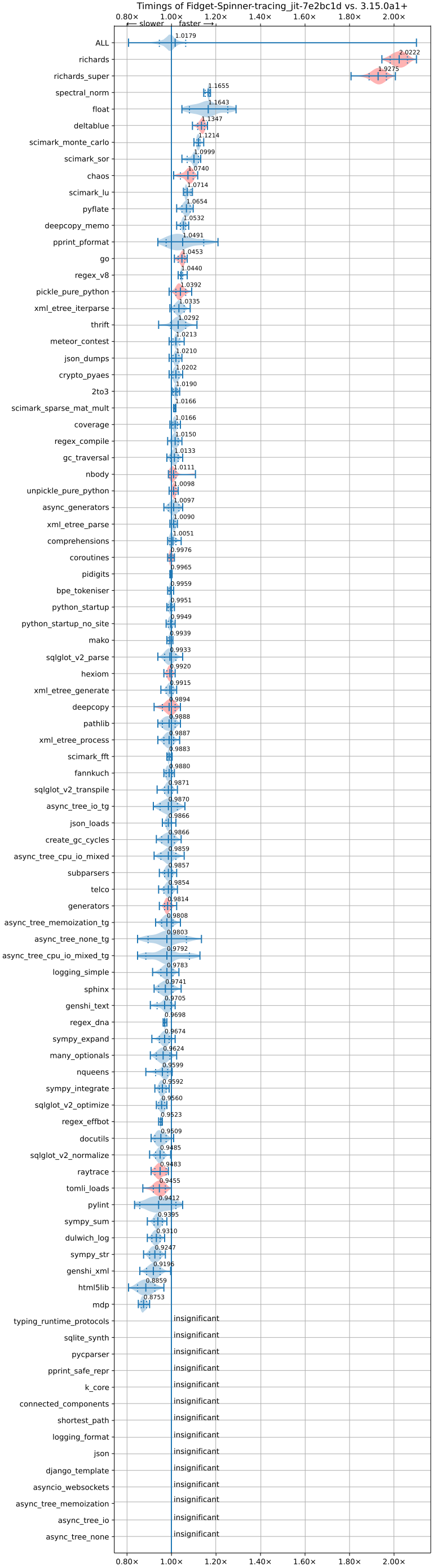
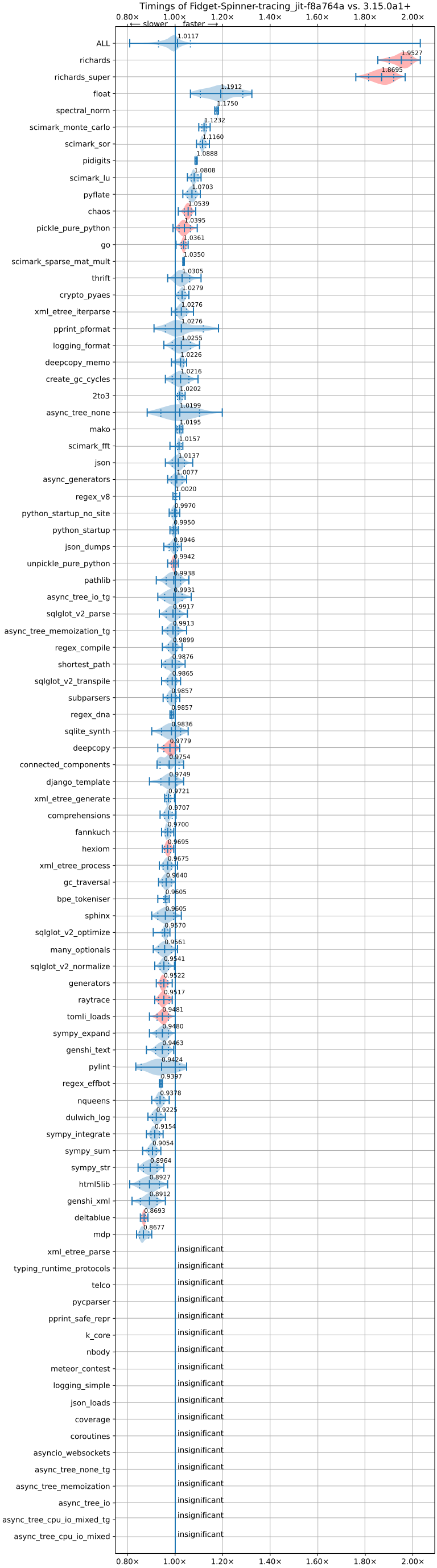
This PR changes the current JIT model from trace projection to trace recording. Benchmarking: better pyperformance (about 1.7% overall) geomean versus current https://raw.githubusercontent.com/facebookexperimental/free-threading-benchmarking/refs/heads/main/results/bm-20251108-3.15.0a1%2B-7e2bc1d-JIT/bm-20251108-vultr-x86_64-Fidget%252dSpinner-tracing_jit-3.15.0a1%2B-7e2bc1d-vs-base.svg, 100% faster Richards on the most improved benchmark versus the current JIT. Slowdown of about 10-15% on the worst benchmark versus the current JIT. **Note: the fastest version isn't the one merged, as it relies on fixing bugs in the specializing interpreter, which is left to another PR**. The speedup in the merged version is about 1.1%. https://raw.githubusercontent.com/facebookexperimental/free-threading-benchmarking/refs/heads/main/results/bm-20251112-3.15.0a1%2B-f8a764a-JIT/bm-20251112-vultr-x86_64-Fidget%252dSpinner-tracing_jit-3.15.0a1%2B-f8a764a-vs-base.svg

Stats: 50% more uops executed, 30% more traces entered the last time we ran them. It also suggests our trace lengths for a real trace recording JIT are too short, as a lot of trace too long aborts https://github.com/facebookexperimental/free-threading-benchmarking/blob/main/results/bm-20251023-3.15.0a1%2B-eb73378-CLANG%2CJIT/bm-20251023-vultr-x86_64-Fidget%252dSpinner-tracing_jit-3.15.0a1%2B-eb73378-pystats-vs-base.md .

This new JIT frontend is already able to record/execute significantly more instructions than the previous JIT frontend. In this PR, we are now able to record through custom dunders, simple object creation, generators, etc. None of these were done by the old JIT frontend. Some custom dunders uops were discovered to be broken as part of this work gh-140277

The optimizer stack space check is disabled, as it's no longer valid to deal with underflow.

Pros:
* Ignoring the generated tracer code as it's automatically created, this is only additional 1k lines of code. The maintenance burden is handled by the DSL and code generator.
* `optimizer.c` is now significantly simpler, as we don't have to do strange things to recover the bytecode from a trace.
* The new JIT frontend is able to handle a lot more control-flow than the old one.
* Tracing is very low overhead. We use the tail calling interpreter/computed goto interpreter to switch between tracing mode and non-tracing mode. I call this mechanism dual dispatch, as we have two dispatch tables dispatching to each other. Specialization is still enabled while tracing.
* Better handling of polymorphism. We leverage the specializing interpreter for this.

Cons:
* (For now) requires tail calling interpreter or computed gotos. This means no Windows JIT for now :(. Not to fret, tail calling is coming soon to Windows though https://github.com/python/cpython/pull/139962

Design:
* After each instruction, the `record_previous_inst` function/label is executed. This does as the name suggests.
* The tracing interpreter lowers bytecode to uops directly so that it can obtain "fresh" values at the point of lowering.
* The tracing version behaves nearly identical to the normal interpreter, in fact it even has specialization! This allows it to run without much of a slowdown when tracing. The actual cost of tracing is only a function call and writes to memory.
* The tracing interpreter uses the specializing interpreter's deopt to naturally form the side exit chains. This allows it to side exit chain effectively, without repeating much code. We force a re-specializing when tracing a deopt.
* The tracing interpreter can even handle goto errors/exceptions, but I chose to disable them for now as it's not tested.
* Because we do not share interpreter dispatch, there is should be no significant slowdown to the original specializing interpreter on tailcall and computed got with JIT disabled. With JIT enabled, there might be a slowdown in the form of the JIT trying to trace.
* Things that could have dynamic instruction pointer effects are guarded on. The guard deopts to a new instruction --- `_DYNAMIC_EXIT`.
234 lines
7.3 KiB
C
234 lines
7.3 KiB
C
// Statistics on Python performance.
|
|
//
|
|
// API:
|
|
//
|
|
// - _Py_INCREF_STAT_INC() and _Py_DECREF_STAT_INC() used by Py_INCREF()
|
|
// and Py_DECREF().
|
|
// - _PyStats_GET()
|
|
//
|
|
// Functions of the sys module:
|
|
//
|
|
// - sys._stats_on()
|
|
// - sys._stats_off()
|
|
// - sys._stats_clear()
|
|
// - sys._stats_dump()
|
|
//
|
|
// Python must be built with ./configure --enable-pystats to define the
|
|
// _PyStats_GET() macro.
|
|
//
|
|
// Define _PY_INTERPRETER macro to increment interpreter_increfs and
|
|
// interpreter_decrefs. Otherwise, increment increfs and decrefs.
|
|
//
|
|
// The number of incref operations counted by `incref` and
|
|
// `interpreter_incref` is the number of increment operations, which is
|
|
// not equal to the total of all reference counts. A single increment
|
|
// operation may increase the reference count of an object by more than
|
|
// one. For example, see `_Py_RefcntAdd`.
|
|
|
|
#ifndef Py_CPYTHON_PYSTATS_H
|
|
# error "this header file must not be included directly"
|
|
#endif
|
|
|
|
#define PYSTATS_MAX_UOP_ID 1024
|
|
|
|
#define SPECIALIZATION_FAILURE_KINDS 60
|
|
|
|
/* Stats for determining who is calling PyEval_EvalFrame */
|
|
#define EVAL_CALL_TOTAL 0
|
|
#define EVAL_CALL_VECTOR 1
|
|
#define EVAL_CALL_GENERATOR 2
|
|
#define EVAL_CALL_LEGACY 3
|
|
#define EVAL_CALL_FUNCTION_VECTORCALL 4
|
|
#define EVAL_CALL_BUILD_CLASS 5
|
|
#define EVAL_CALL_SLOT 6
|
|
#define EVAL_CALL_FUNCTION_EX 7
|
|
#define EVAL_CALL_API 8
|
|
#define EVAL_CALL_METHOD 9
|
|
|
|
#define EVAL_CALL_KINDS 10
|
|
|
|
typedef struct _specialization_stats {
|
|
uint64_t success;
|
|
uint64_t failure;
|
|
uint64_t hit;
|
|
uint64_t deferred;
|
|
uint64_t miss;
|
|
uint64_t deopt;
|
|
uint64_t failure_kinds[SPECIALIZATION_FAILURE_KINDS];
|
|
} SpecializationStats;
|
|
|
|
typedef struct _opcode_stats {
|
|
SpecializationStats specialization;
|
|
uint64_t execution_count;
|
|
uint64_t pair_count[256];
|
|
} OpcodeStats;
|
|
|
|
typedef struct _call_stats {
|
|
uint64_t inlined_py_calls;
|
|
uint64_t pyeval_calls;
|
|
uint64_t frames_pushed;
|
|
uint64_t frame_objects_created;
|
|
uint64_t eval_calls[EVAL_CALL_KINDS];
|
|
} CallStats;
|
|
|
|
typedef struct _object_stats {
|
|
uint64_t increfs;
|
|
uint64_t decrefs;
|
|
uint64_t interpreter_increfs;
|
|
uint64_t interpreter_decrefs;
|
|
uint64_t immortal_increfs;
|
|
uint64_t immortal_decrefs;
|
|
uint64_t interpreter_immortal_increfs;
|
|
uint64_t interpreter_immortal_decrefs;
|
|
uint64_t allocations;
|
|
uint64_t allocations512;
|
|
uint64_t allocations4k;
|
|
uint64_t allocations_big;
|
|
uint64_t frees;
|
|
uint64_t to_freelist;
|
|
uint64_t from_freelist;
|
|
uint64_t inline_values;
|
|
uint64_t dict_materialized_on_request;
|
|
uint64_t dict_materialized_new_key;
|
|
uint64_t dict_materialized_too_big;
|
|
uint64_t dict_materialized_str_subclass;
|
|
uint64_t type_cache_hits;
|
|
uint64_t type_cache_misses;
|
|
uint64_t type_cache_dunder_hits;
|
|
uint64_t type_cache_dunder_misses;
|
|
uint64_t type_cache_collisions;
|
|
/* Temporary value used during GC */
|
|
uint64_t object_visits;
|
|
} ObjectStats;
|
|
|
|
typedef struct _gc_stats {
|
|
uint64_t collections;
|
|
uint64_t object_visits;
|
|
uint64_t objects_collected;
|
|
uint64_t objects_transitively_reachable;
|
|
uint64_t objects_not_transitively_reachable;
|
|
} GCStats;
|
|
|
|
#ifdef Py_GIL_DISABLED
|
|
// stats specific to free-threaded build
|
|
typedef struct _ft_stats {
|
|
// number of times interpreter had to spin or park when trying to acquire a mutex
|
|
uint64_t mutex_sleeps;
|
|
// number of times that the QSBR mechanism polled (compute read sequence value)
|
|
uint64_t qsbr_polls;
|
|
// number of times stop-the-world mechanism was used
|
|
uint64_t world_stops;
|
|
} FTStats;
|
|
#endif
|
|
|
|
typedef struct _uop_stats {
|
|
uint64_t execution_count;
|
|
uint64_t miss;
|
|
uint64_t pair_count[PYSTATS_MAX_UOP_ID + 1];
|
|
} UOpStats;
|
|
|
|
#define _Py_UOP_HIST_SIZE 32
|
|
|
|
typedef struct _optimization_stats {
|
|
uint64_t attempts;
|
|
uint64_t traces_created;
|
|
uint64_t traces_executed;
|
|
uint64_t uops_executed;
|
|
uint64_t trace_stack_overflow;
|
|
uint64_t trace_stack_underflow;
|
|
uint64_t trace_too_long;
|
|
uint64_t trace_too_short;
|
|
uint64_t inner_loop;
|
|
uint64_t recursive_call;
|
|
uint64_t low_confidence;
|
|
uint64_t unknown_callee;
|
|
uint64_t executors_invalidated;
|
|
UOpStats opcode[PYSTATS_MAX_UOP_ID + 1];
|
|
uint64_t unsupported_opcode[256];
|
|
uint64_t trace_length_hist[_Py_UOP_HIST_SIZE];
|
|
uint64_t trace_run_length_hist[_Py_UOP_HIST_SIZE];
|
|
uint64_t optimized_trace_length_hist[_Py_UOP_HIST_SIZE];
|
|
uint64_t optimizer_attempts;
|
|
uint64_t optimizer_successes;
|
|
uint64_t optimizer_contradiction;
|
|
uint64_t optimizer_frame_overflow;
|
|
uint64_t optimizer_failure_reason_no_memory;
|
|
uint64_t remove_globals_builtins_changed;
|
|
uint64_t remove_globals_incorrect_keys;
|
|
uint64_t error_in_opcode[PYSTATS_MAX_UOP_ID + 1];
|
|
// JIT memory stats
|
|
uint64_t jit_total_memory_size;
|
|
uint64_t jit_code_size;
|
|
uint64_t jit_trampoline_size;
|
|
uint64_t jit_data_size;
|
|
uint64_t jit_padding_size;
|
|
uint64_t jit_freed_memory_size;
|
|
uint64_t trace_total_memory_hist[_Py_UOP_HIST_SIZE];
|
|
} OptimizationStats;
|
|
|
|
typedef struct _rare_event_stats {
|
|
/* Setting an object's class, obj.__class__ = ... */
|
|
uint64_t set_class;
|
|
/* Setting the bases of a class, cls.__bases__ = ... */
|
|
uint64_t set_bases;
|
|
/* Setting the PEP 523 frame eval function, _PyInterpreterState_SetFrameEvalFunc() */
|
|
uint64_t set_eval_frame_func;
|
|
/* Modifying the builtins, __builtins__.__dict__[var] = ... */
|
|
uint64_t builtin_dict;
|
|
/* Modifying a function, e.g. func.__defaults__ = ..., etc. */
|
|
uint64_t func_modification;
|
|
/* Modifying a dict that is being watched */
|
|
uint64_t watched_dict_modification;
|
|
uint64_t watched_globals_modification;
|
|
} RareEventStats;
|
|
|
|
typedef struct _stats {
|
|
OpcodeStats opcode_stats[256];
|
|
CallStats call_stats;
|
|
ObjectStats object_stats;
|
|
OptimizationStats optimization_stats;
|
|
#ifdef Py_GIL_DISABLED
|
|
FTStats ft_stats;
|
|
#endif
|
|
RareEventStats rare_event_stats;
|
|
GCStats gc_stats[3]; // must match NUM_GENERATIONS
|
|
} PyStats;
|
|
|
|
// Export for most shared extensions
|
|
PyAPI_FUNC(PyStats *) _PyStats_GetLocal(void);
|
|
|
|
#if defined(HAVE_THREAD_LOCAL) && !defined(Py_BUILD_CORE_MODULE)
|
|
// use inline function version defined in cpython/pystate.h
|
|
static inline PyStats *_PyThreadState_GetStatsFast(void);
|
|
#define _PyStats_GET _PyThreadState_GetStatsFast
|
|
#else
|
|
#define _PyStats_GET _PyStats_GetLocal
|
|
#endif
|
|
|
|
#define _Py_STATS_EXPR(expr) \
|
|
do { \
|
|
PyStats *s = _PyStats_GET(); \
|
|
if (s != NULL) { \
|
|
s->expr; \
|
|
} \
|
|
} while (0)
|
|
|
|
#define _Py_STATS_COND_EXPR(cond, expr) \
|
|
do { \
|
|
PyStats *s = _PyStats_GET(); \
|
|
if (s != NULL && (cond)) { \
|
|
s->expr; \
|
|
} \
|
|
} while (0)
|
|
|
|
#ifdef _PY_INTERPRETER
|
|
# define _Py_INCREF_STAT_INC() _Py_STATS_EXPR(object_stats.interpreter_increfs++)
|
|
# define _Py_DECREF_STAT_INC() _Py_STATS_EXPR(object_stats.interpreter_decrefs++)
|
|
# define _Py_INCREF_IMMORTAL_STAT_INC() _Py_STATS_EXPR(object_stats.interpreter_immortal_increfs++)
|
|
# define _Py_DECREF_IMMORTAL_STAT_INC() _Py_STATS_EXPR(object_stats.interpreter_immortal_decrefs++)
|
|
#else
|
|
# define _Py_INCREF_STAT_INC() _Py_STATS_EXPR(object_stats.increfs++)
|
|
# define _Py_DECREF_STAT_INC() _Py_STATS_EXPR(object_stats.decrefs++)
|
|
# define _Py_INCREF_IMMORTAL_STAT_INC() _Py_STATS_EXPR(object_stats.immortal_increfs++)
|
|
# define _Py_DECREF_IMMORTAL_STAT_INC() _Py_STATS_EXPR(object_stats.immortal_decrefs++)
|
|
#endif
|