 120f1874ef
This CL is part of a set of CLs that attempt to reduce how much work the GC must do. See the design in https://go.dev/design/74299-runtime-freegc This CL adds a better test of assist credit handling when heap objects are being reused after a runtime.freegc call. The main approach is bracketing alloc/free pairs with measurements of the assist credit before and after, and hoping to see a net zero change in the assist credit. However, validating the desired behavior is perhaps a bit subtle. To help stabilize the measurements, we do acquirem in the test code to avoid being preempted during the measurements to reduce other code's ability to adjust the assist credit while we are measuring, and we also reduce GOMAXPROCS to 1. This test currently does fail if we deliberately introduce bugs in the runtime.freegc implementation such as if we: - never adjust the assist credit when reusing an object, or - always adjust the assist credit when reusing an object, or - deliberately mishandle internal fragmentation. The two main cases of current interest for testing runtime.freegc are when over the course of our bracketed measurements gcBlackenEnable is either true or false. The test attempts to exercise both of those case by running the GC continually in the background (which we can see seems effective based on logging and by how our deliberate bugs fail). This passes ~10K test executions locally via stress. A small note to the future: a previous incarnation of this test (circa patchset 11 of this CL) did not do acquirem but had an approach of ignoring certain measurements, which also was able to pass ~10K runs via stress. The current version in this CL is simpler, but recording the existence of the prior version here in case it is useful in the future. (Hopefully not.) Updates #74299 Change-Id: I46c7e0295d125f5884fee0cc3d3d31aedc7e5ff4 Reviewed-on: https://go-review.googlesource.com/c/go/+/717520 Reviewed-by: Michael Knyszek <mknyszek@google.com> Reviewed-by: Junyang Shao <shaojunyang@google.com> LUCI-TryBot-Result: Go LUCI <golang-scoped@luci-project-accounts.iam.gserviceaccount.com> |
||
|---|---|---|
| .github | ||
| api | ||
| doc | ||
| lib | ||
| misc | ||
| src | ||
| test | ||
| .gitattributes | ||
| .gitignore | ||
| codereview.cfg | ||
| CONTRIBUTING.md | ||
| go.env | ||
| LICENSE | ||
| PATENTS | ||
| README.md | ||
| SECURITY.md | ||
The Go Programming Language
Go is an open source programming language that makes it easy to build simple, reliable, and efficient software.
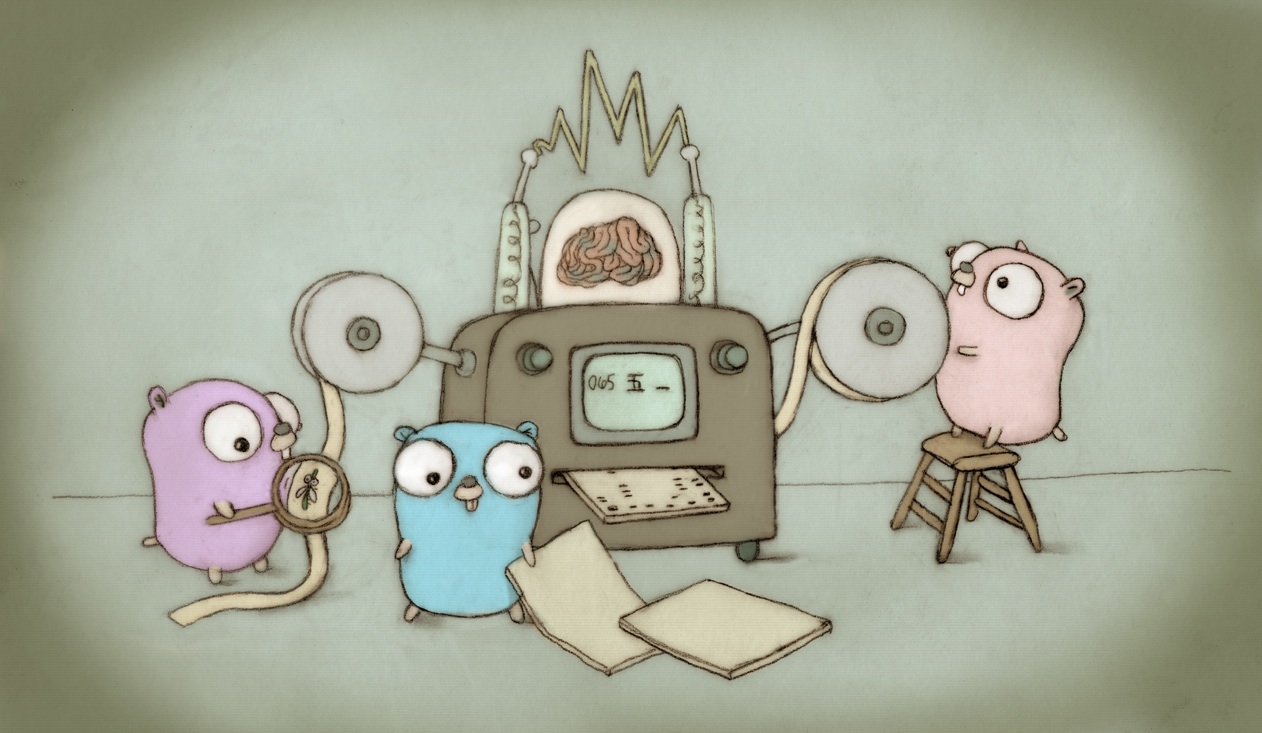 Gopher image by Renee French, licensed under Creative Commons 4.0 Attribution license.
Our canonical Git repository is located at https://go.googlesource.com/go. There is a mirror of the repository at https://github.com/golang/go.
Unless otherwise noted, the Go source files are distributed under the BSD-style license found in the LICENSE file.
Download and Install
Binary Distributions
Official binary distributions are available at https://go.dev/dl/.
After downloading a binary release, visit https://go.dev/doc/install for installation instructions.
Install From Source
If a binary distribution is not available for your combination of operating system and architecture, visit https://go.dev/doc/install/source for source installation instructions.
Contributing
Go is the work of thousands of contributors. We appreciate your help!
To contribute, please read the contribution guidelines at https://go.dev/doc/contribute.
Note that the Go project uses the issue tracker for bug reports and proposals only. See https://go.dev/wiki/Questions for a list of places to ask questions about the Go language.